What Is PM Surya Sarovar Yojana? India’s New Rs 5,070 Crore Floating Solar Scheme, Explained
The Union Cabinet just cleared the Pradhan Mantri Surya Sarovar Yojana, PM-SSY, for Rs 5,070 crore, 5,000 MW of floating solar on India’s reservoirs and industrial ponds, and no fresh land needed to get there. Rollout runs FY 2026-27 to FY 2030-31.
Think of it as the next chapter after PM Surya Ghar. Same push, different surface; this one plays out on water instead of rooftops. Here’s the breakdown and why it’s worth knowing even if you’ve got zero plans to build a utility-scale plant yourself.
All you need to know about Floating Solar
Floating solar, or FSPV, is pretty much what it sounds like. Panels sit on rafts, floating on reservoirs, canals, and industrial ponds, wherever there’s water and an open sky above it.
Why bother with water at all? Because sunlight was never India’s problem. Space was. Land close to where power actually gets used tends to be expensive, contested, or already spoken for by farms and forests. Reservoirs don’t have that fight attached to them. There’s a small performance bonus too, since panels sitting over water run a touch cooler than ones baking on a metal roof in May, and cooler panels push out slightly more power.
The Numbers
Rs 5,070 crore is the total outlay. That funds a jump to 5,000 MW of floating solar capacity, up from roughly 700 MW today, which puts the scale of this in perspective pretty quickly.
Every project has to come with storage attached, a minimum of 2 hours’ worth, and across the whole scheme that works out to about 10,000 MWh. Sanctioning happens between now and FY 2030-31, though the money keeps flowing until FY 2032-33.
According to NISE, India’s reservoirs and inland water bodies could support around 102.18 GWp of floating solar in total. So this 5,000 MW target isn’t the ceiling; it’s barely a first bite. On the ground, the scheme is projected to create somewhere between 16,000 and 17,000 full-time equivalent jobs and cut roughly 10 million tonnes of CO₂ a year once projects come online.
Where the Money Actually Goes
Two buckets. First, up to Rs 50 lakh per project before anyone breaks ground, meant for bathymetry, hydrography, and environmental studies. Second, the bigger one: Rs 1 crore per MW, paid out only once a project is commissioned and actually generating.
That second condition matters. Developers don’t get rewarded for announcing a project, only for finishing one.
Why It’s a Bigger Deal Than It Sounds
Land stops being the bottleneck. Ground-mounted solar at scale usually means a fight over agricultural or forest land somewhere. Reservoirs sidestep that fight entirely.
Storage isn’t an afterthought here; it’s baked into eligibility. That’s a shift from India’s earlier solar push, which was mostly about racking up capacity. This one cares whether the power is usable at 8 pm, not just noon.
There’s also a domestic manufacturing angle, since the scheme is expected to lean on Indian-made floatation systems, PV modules, and storage hardware, in step with the Aatmanirbhar Bharat push.
If You’re Not Building a Reservoir-Scale Plant
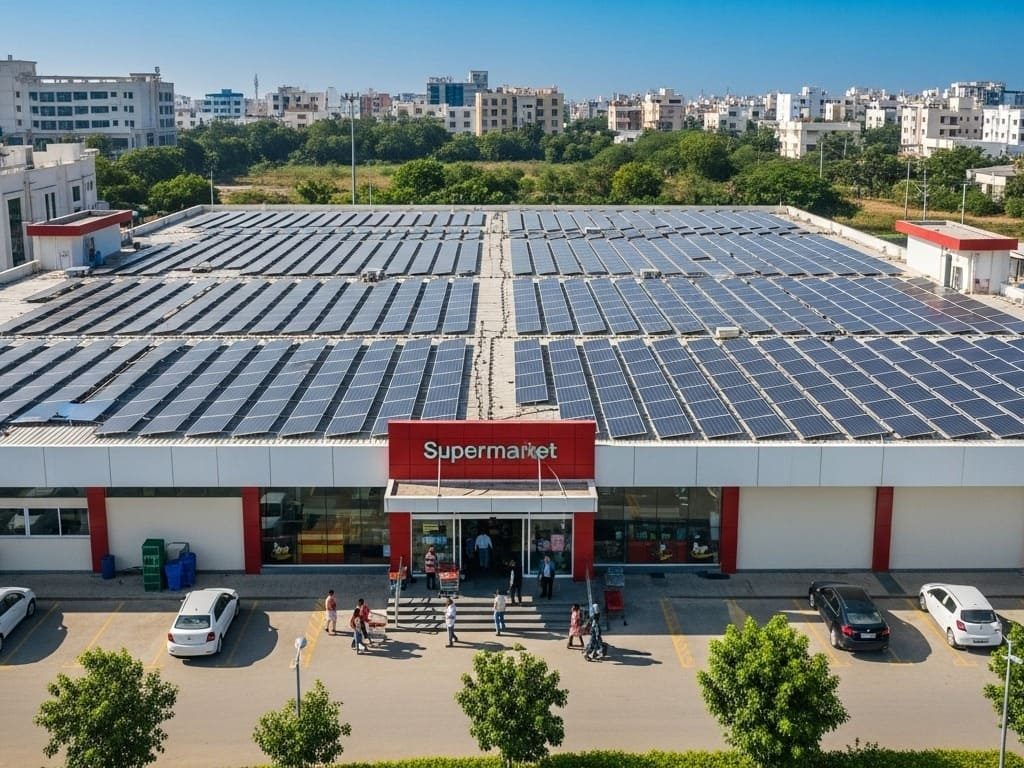
PM-SSY itself is for developers and state agencies, not homeowners, so you can’t apply for this one for your rooftop. But it’s a fair signal of where things are headed. Government money is now flowing into solar at every scale, from rooftop solar solutions right up to gigawatt-class floating plants.
The basics are the same either way: dependable solar panels, a solar inverter sized correctly for your load, and enough battery storage to get through an outage without thinking about it. If you’re weighing your own setup, UTL Solar’s on-grid, off-grid, and hybrid solar systems are worth a look.
FAQs
What is PM Surya Sarovar Yojana?
A Rs 5,070 crore central scheme to build 5,000 MW of floating solar with energy storage on India’s reservoirs and industrial ponds, running FY 2026-27 through FY 2030-31.
How is it different from PM Surya Ghar?
PM Surya Ghar is about rooftop solar for homes. This one is utility-scale, built for developers and state agencies, and it sits on water, not roofs.
What’s the subsidy structure?
Up to Rs 50 lakh per project for pre-construction feasibility studies, then Rs 1 crore per MW once the project is commissioned and generating.
Does water actually make solar panels more efficient?
A bit, yes. The cooling effect from being over water can lift output slightly compared to rooftop panels in peak heat, though it’s not a dramatic difference. For most homes and small businesses, a rooftop is still the practical option since you don’t need a reservoir to install one.
Can homeowners apply for PM-SSY?
No, this scheme is scoped for large floating solar developers, not individual rooftop installations.