
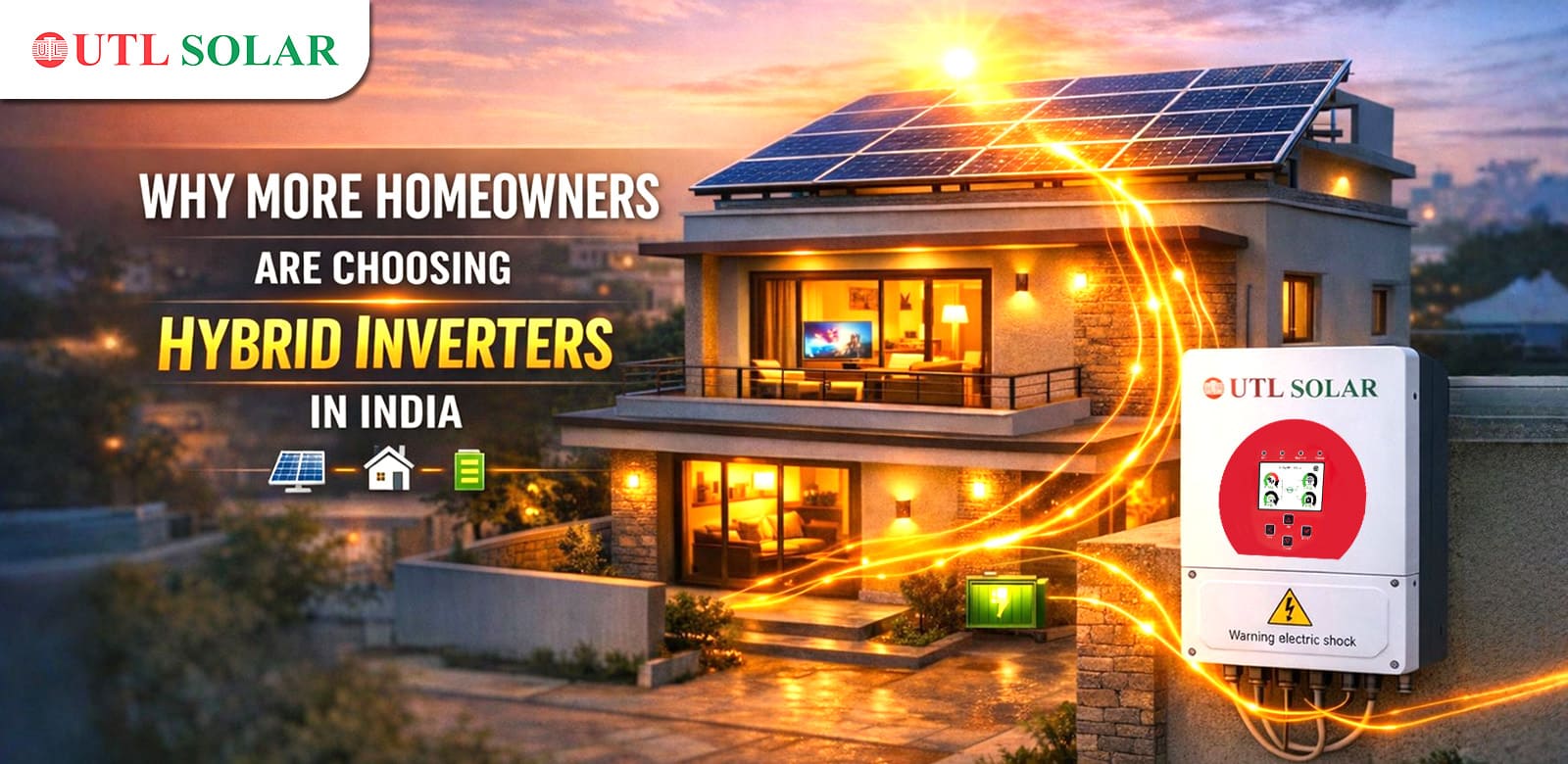
Why More Homeowners Are Choosing Hybrid Inverters in India
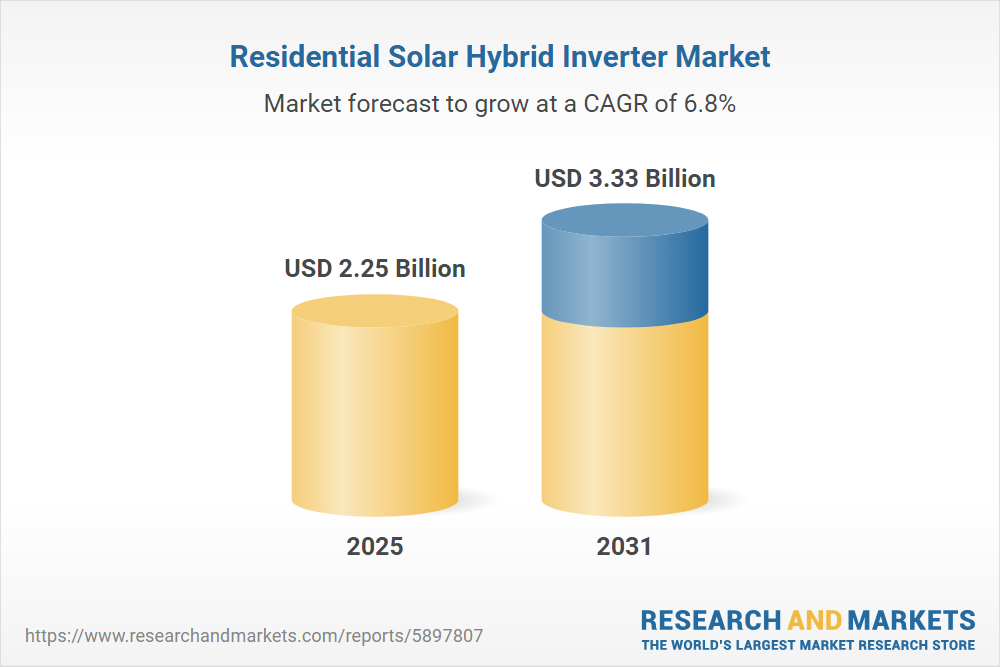
India’s clean energy transition is no longer just about increasing solar adoption—it is increasingly defined by how efficiently that energy is managed. With initiatives like PM Surya Ghar: Muft Bijli Yojna accelerating rooftop solar uptake, homeowners are seeking systems that deliver both reliability and control. This shift is reflected in market trends as well, with the global residential solar hybrid inverter market projected to grow from USD 2.25 billion in 2025 to USD 3.33 billion by 2031, it highlights a steady rise in demand for integrated energy solutions.
Originally developed to bridge the gap between conventional solar inverters and battery systems, hybrid inverters have evolved into a core component of modern solar setups. Their ability to optimize power usage, enhance self-consumption, and ensure energy availability during outages makes them particularly relevant in today’s dynamic energy environment. As India simultaneously scales its solar capacity and strengthens domestic manufacturing, the growing demand for resilient and efficient energy solutions is naturally positioning hybrid inverters at the center of this transition.
What is a Hybrid Inverter?
In a typical solar setup, different components perform separate roles. A standard solar inverter converts the direct current (DC) generated by solar panels into alternating current (AC) for household use. If battery storage is added, it usually requires an additional inverter or controller, which can make the system more complex.
A hybrid inverter simplifies this by combining these functions into a single unit. It can convert solar energy for immediate use, store excess electricity in batteries, and draw power from the grid when needed—all within one system. This integrated approach allows the inverter to automatically switch between solar power, battery storage, and grid electricity based on availability. As a result, homeowners get a more streamlined, efficient, and flexible way to manage their energy needs.
How Government Subsidies Making Hybrid Systems More Affordable
While hybrid solar systems involve a higher initial investment due to battery integration, government initiatives like PM Surya Ghar: Muft Bijli Yojana are significantly improving their affordability for homeowners.
Reduced Upfront Cost Barrier
Subsidies on rooftop solar systems directly lower the initial investment. It makes hybrid-ready setups financially accessible.
Faster Return on Investment (ROI)
With subsidy benefits, the payback period becomes shorter. When combined with savings from optimized solar usage and reduced grid dependency, hybrid systems deliver better long-term value.
Support for Residential Consumers
Government schemes are specifically designed to boost adoption among homeowners, aligning well with hybrid inverters that cater to both savings and backup needs.
Increased Confidence in Solar Investment
Policy support, along with net metering benefits, reduces financial risk and encourages users to adopt more advanced systems like hybrid inverters instead of basic setups.
Reasons Behind the Growing Demand for Hybrid Inverters in India
Frequent power outages and inconsistent supply in many regions contribute to this shift. Traditional inverters provide backup, but they do not optimize energy sources. Let’s take a closer look at the core reasons for the rise of hybrid solar inverters.
Simultaneous Grid + Battery + Solar Management
It uniquely handles all three power sources together. Unlike on-grid (no backup) or off-grid (no grid support), it dynamically switches and balances energy flow based on availability and demand.
Uninterrupted Power Without Wasting Solar Energy
In on-grid systems, solar shuts down during outages for safety reasons. Solar hybrid inverters continue to supply power using stored energy while still utilizing solar generation and ensure both safety and continuity.
Smart Energy Prioritization
Hybrid systems stand out because they automatically decide the most efficient source of power—solar, battery, or grid. This ensures optimal energy usage without requiring any manual switching, something that neither on-grid nor off-grid systems can fully achieve.
Companies like UTL Solar manufactures a hybrid inverter range around this concept of intelligent energy flow. With a diverse portfolio that includes a wide range of hybrid PCUs, Panels, solar inverters, and other energy solutions, we cater to residential and commercial applications. Our focus on delivering solar systems that ensure a reliable balance between savings, backup, and grid support for everyday use. One such example is our Sigma Pro Solar PCU series equipped with smart priority mode feature:
- Powering the Load (Appliances)
The system follows a priority of Solar → Battery → Grid
This ensures that your daily energy consumption relies first on solar power, then stored energy, and only uses grid electricity when absolutely required—helping reduce electricity expenses.
- Battery Charging Logic
Charging is managed through Solar → Grid
The system maximizes solar usage by charging the battery primarily from solar energy, while the grid supports charging only when solar generation is insufficient.
- Daytime Operation
During the day, the priority remains Solar → Battery → Grid.
Solar energy powers the load and charges the battery simultaneously. If demand increases, the system smoothly shifts to battery and then grid support without interruption.
- Nighttime Operation
At night, the system operates on Battery → Grid.
Stored energy is utilized first, ensuring efficient use of the battery before drawing power from the grid.
Battery Backup Without Full Off-Grid Investment
Users get the advantage of battery storage without completely disconnecting from the grid. This makes hybrid solar systems a balanced and cost-conscious alternative to fully off-grid setups.
Better Handling of Peak Load and Tariff Fluctuations
It can store energy when costs are low or solar production is high. Later, it is used during peak tariff hours—something on-grid systems cannot manage independently.
Reduced Dependency Without Complete Isolation
Hybrid systems strike a middle ground—reducing grid dependency while still keeping it as a fallback.
Optimized Use of Excess Solar Power
Instead of exporting all surplus energy (as in on-grid systems), hybrid inverters store it for later use. It improves self-consumption and reduces reliance on external supply.
Greater Control Through Intelligent Monitoring
Modern hybrid inverters provide detailed insights into generation, consumption, and storage which enables users to actively optimize their energy usage.
Scalability and Flexibility
Hybrid solar inverters can be easily upgraded with additional solar panels or battery storage which makes them suitable for evolving energy needs.
Government Support and Policies
Net metering and subsidies like PM Surya Ghar Yojana are encouraging consumers to invest in solar-compatible solutions.
Advancements in Technology
Modern hybrid inverters offer smart monitoring, higher efficiency, and better battery integration, making them more reliable and user-friendly.
Growing Environmental Awareness
The shift toward cleaner energy solutions is driving demand for systems that support reduced carbon emissions and sustainable living.
Maximise Savings with UTL Solar Customised Hybrid Systems
UTL hybrid inverters are not just power backup devices—they function as intelligent energy management systems that balance savings, reliability, and flexibility.
True Hybrid Functionality (Not Just Backup or Grid-Tie)
Our hybrid solar inverters work in both stand-alone (off-grid) and grid-interactive (on-grid) modes. This means users don’t have to choose between backup and grid export—they get both in a single system.
Flexible Operating Modes
The range of hybrid solar PCUs offer multiple modes (hybrid, smart, or backup priority). It allows you to adjust system behavior based on your usage pattern and power requirements.
Proper Installation and Configuration
A well-designed system setup plays a critical role in performance. UTL Solar solutions are most effective when configured correctly to match your usage and local power conditions.
Built for Indian Power Conditions
Proudly an Indian solar manufacturing firm, UTL Solar understands the challenges of India’s diverse power landscape—ranging from voltage fluctuations and frequent outages to inconsistent grid supply and varying solar conditions.
Our hybrid solar PCUs are engineered to handle these real-world issues with stable performance, fast switching, and efficient energy management. This ensures reliable power for both urban and semi-urban users, where electricity conditions can change throughout the day. We deliver systems that not only perform efficiently but also provide long-term durability and consistent savings under practical usage conditions.
Intelligent Real-Time Energy Management
Our hybrid system continuously monitors solar generation, battery status, and load demand to automatically adjust power flow. It calculates consumption in real time and stores or supplies energy accordingly to ensure efficient utilization without manual control.
rMPPT Technology for Higher Solar Output
UTL Solar hybrid inverters use advanced rMPPT (Rapid Maximum Power Point Tracking), which can extract significantly 30% more energy from solar panels compared to conventional controllers—especially useful in low-light or fluctuating conditions.
Priority-Based Smart Operating Modes
With modes like Smart / Hybrid / PCU, users can define or automate power priority (Solar → Battery → Grid). This flexibility allows better control over savings, backup, or grid usage depending on local power conditions
Bi-Directional Power Flow (Import + Export)
Unlike many basic systems, UTL hybrid Solar inverters can both export excess solar energy to the grid and draw power when needed, making them suitable for net metering and maximizing solar ROI.
Seamless Day–Night Transition
The system automatically shifts from solar usage during the day to battery and grid support at night, without any interruption. This ensures continuous power availability with optimized energy use.
Pure Sine Wave Output for Appliance Safety
Built with DSP-based technology, UTL hybrid PCU delivers stable pure sine wave output, which is essential for running sensitive appliances like ACs, refrigerators, and computers safely.
Wide Compatibility with Battery Types
These inverters support both lithium-ion and lead-acid batteries, giving users flexibility in choosing or upgrading storage systems based on requirement, budget and usage.
Advanced Monitoring and Control Options
Features like multicolor LCD displays and advanced remote monitoring let users track performance, consumption, and system health in real time.
Final Thoughts
Hybrid inverters are no longer just an optional upgrade—they are becoming a practical necessity for modern Indian households. By combining solar generation, battery storage, and grid support into one intelligent system, they offer a balanced approach to reliable power and long-term cost savings. As access to advanced solar solutions continues to improve, a strong network of trusted solar dealers across India is making these systems more accessible than ever.