How Shading Impacts Solar Panel Output and Tips to Plan Layout
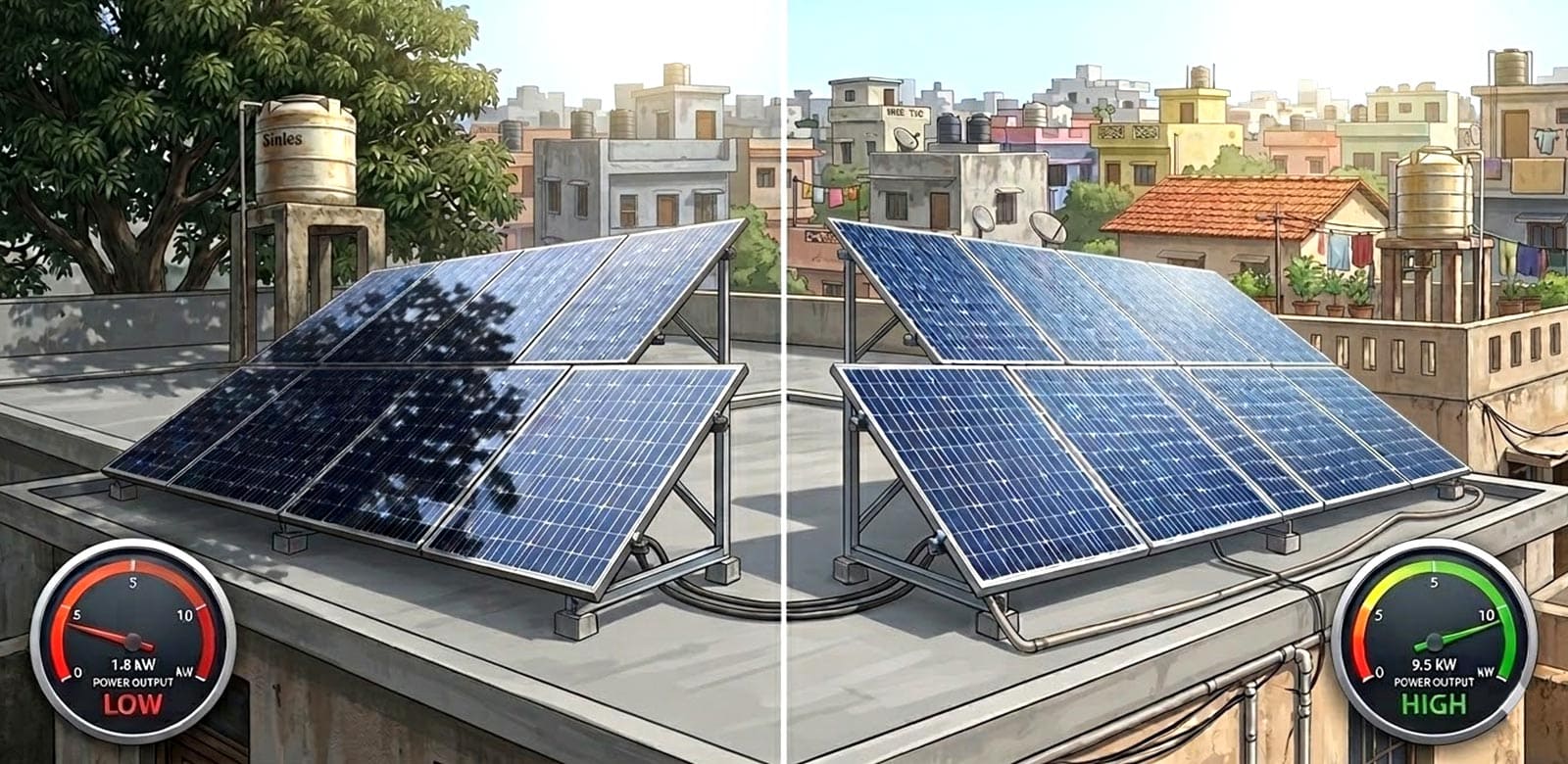
Do you know that the small 5% drop in solar performance due to shading can lead to a big loss, as it can build up over 25 years and cost you more than the entire solar plant?
The two silent factors play a much bigger role in deciding if your solar offers you the results you expected or becomes a disappointment.
- Shading
- Layout planning
You see the perfectly installed solar systems on the rooftop, but do they deliver the output they promised earlier?
The answer depends on how properly shading was assessed and how intelligently the layout was planned. Because both ensure uninterrupted sunlight throughout the day and across different seasons.
Different Types of Solar Panel Shading and Their Impact
Let’s explore the 4 different kinds of solar panel shading you need to consider during the installation process to ensure the 100% solar panel output.
1. Partial Shading
As the name denotes, this shading occurs when shadows cover only a few or a single part of the panel. When any object partially blocks the sun rays, it causes:
- Consistent drop in power output in the shadowed panels.
- Can trigger bypass diodes, reducing usable output.
2. Full Shading
It occurs when the entire panel or multiple panels are completely shaded or blocked from sunlight. It may happen due to nearby buildings, tree branches, and chimneys. Such a shade generates serious consequences, like:
- Affects the entire string.
- Leads to noticeable daily energy loss.
3. Seasonal Shading
This shading varies as per the season, like trees with no leaves in summer may impact your solar panel in winter. It also occurs with the sun’s changing positions, shifting clouds, etc. So, it is important to forecast seasonal shading with the advanced system design and technology. It can lead to:
- Underperformance of solar panels across the year.
- Massive drop in power generation during certain months.
4. Edge Shading
This shade directly affects the perimeter of solar arrays due to roof edges in large installations. With the smart solar design, one can reduce the impact of this unavoidable solar shading. It can result in:
- Reduced output in the early morning and evening hours.
- Impact the overall system efficiency.
Why Smart Layout Planning is Critical to Solar System Performance
A well-planned layout ensures:
- Maximising sun exposure all day long: Ensures reducing the energy loss caused by early morning or late evening shadows.
- Balanced energy production across seasons: Helps to maintain steady power generation in both summer and winter months.
- Structural safety and ease of maintenance: Allows proper airflow, provides safe access for cleaning, and helps the system last longer.
Poor layout planning can lead to:
- Uneven power generation: Make the panel underperform and reduce the output of the entire system.
- Long-term efficiency loss: Lower the yearly power generation and lessen the financial returns over the panel’s lifespan.
Major Tips on Planning Solar Panel Layout
Solar panel layout is all about placing each panel in its best place, allowing it to perform consistently and efficiently over time. Here are the major factors to consider during the layout planning:
1. Analysing Sun Position
The sun changes its position throughout the day and even the year. It is more than important to conduct a professional site assessment to:
- Analyze the morning-to-evening sun movement.
- Identify winter shadow lines.
- Avoid placing panels in future shade zones.
2. Panel Orientation and Tilt
It is important to ensure the consistent performance of your system throughout the year and not just during peak summer months.
- South-facing (in India) panels often generate the highest output.
- The light tilt is important to improve performance throughout the year, especially in winter.
3. Proper Spacing Between Rows
Placing panels too close to each other shades the other one and lessens the output.
- Required row spacing mitigates the chances of self-shading.
- Especially important for tilted installations.
4. Avoid Rooftop Obstacles
Plan the layout around the obstacles and not between them.
- Panels near water tanks or walls experience shadows.
- Relocate it to significantly improve output.
5. Planning for Future Growth
While the future is unpredictable, facts like tree growth and building expansions are predictable enough to plan the layout accordingly.
- Plan layout with future shading in mind.
- Leave buffer zones where shadows may expand in the near future.
Though poor planning can reduce 30-50% of energy generation annually, which can lead a homeowner to massive financial loss.
Final Thoughts – Start Solar Success with Advance Planning
Solar system installation happens with a thought of long-term investment, but it can be achieved through smart planning. Proper shading analyses and layout planning maximise daily power generation with consistent performance for decades.
Because the right solar installation is the combination of where and how you install.
At UTL Solar, we offer a wide range of residential and commercial solar packages designed to deliver you exceptional results. Each solar product, including panels, inverters, batteries, and components maximise energy efficiency and reduces the electricity bills.