Questions You Must Ask Before Buying Any Solar Inverter
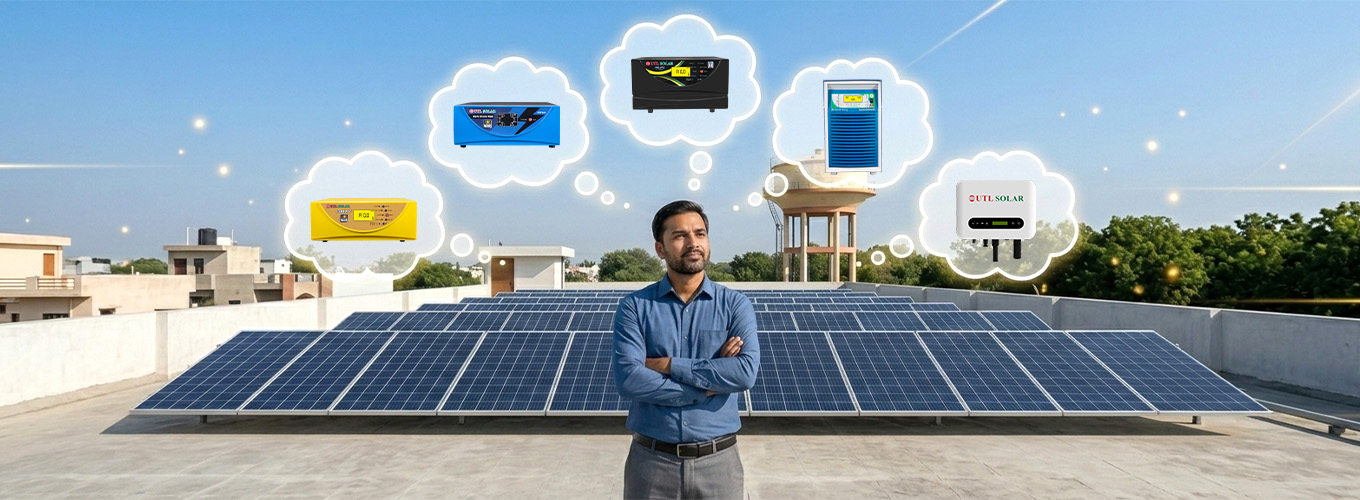
Installing a solar system is a smart step toward saving money. But just before installation, one critical decision comes into focus—the solar inverter. Most people begin their solar journey assuming the inverter is a minor choice compared to the panels. After all, panels generate the power, so how important can the inverter really be?
What many buyers don’t realise at this stage is that the inverter is the brain of the solar system—it directly affects how efficiently power is used, how safe the system operates, and how long it performs reliably. That’s why choosing it without the right understanding can impact both performance and savings over time. This blog will guide you through every essential question to ensure your solar system performs reliably, safely, and maximizes savings.
1. Is the inverter suitable for my type of use—home, shop, office, or factory?
The load an inverter can handle depends on the total power demand of all appliances running at the same time, including their starting surge. This makes load calculation a critical step before selecting any solar inverter. By listing all connected equipment, understanding their wattage, and accounting for peak usage hours, buyers can determine whether an inverter will operate smoothly or struggle under demand. Different applications have different demands. An inverter should be chosen based on where and how it will be used—not just its capacity. The right match ensures efficiency, durability, and consistent performance in your specific environment.
Residential Load Considerations
For residential properties, this means ensuring the inverter can support daily household usage—such as air conditioners, refrigerators, washing machines, lighting, fans, televisions, and kitchen appliances—especially during peak hours when multiple devices run together. For example, a home using two air conditioners, a refrigerator, and basic lighting may require an inverter with enough headroom to handle sudden compressor starts without tripping.
Commercial Load Requirements
In commercial settings like offices, shops, or hospitals, the load extends to computers, servers, elevators, HVAC systems, lighting panels, and backup-critical equipment. Here, the inverter must support long operating hours and stable performance throughout the day. An undersized inverter in such environments can lead to interruptions, productivity loss, or equipment damage.
Industrial Load Demands
For industrial applications, load requirements are even more demanding. Machinery, motors, pumps, and production equipment draw high starting and continuous power. The inverter must be capable of handling heavy surge loads and sustained operation without overheating or efficiency loss. Proper load sizing in industrial setups is essential to avoid downtime, protect expensive equipment, and maintain operational continuity.
A properly sized inverter ensures stable performance, protects connected devices and improves system lifespan. Skipping proper load assessment often leads to frequent shutdowns, early component wear, or unnecessary system upgrades—ultimately reducing the return on investment.
2. Does this inverter let me make the most of my solar system? What is the efficiency of solar inverters?
A solar inverter plays a key role in deciding how much of the solar power generated is actually usable. Solar panels produce DC power, but it is the inverter that converts it into AC power for daily use—and this conversion is where losses occur. High-quality inverters typically achieve efficiency levels of around 96–98%, meaning very little energy is wasted during conversion.
Higher efficiency allows you to extract more usable units from the same set of solar panels, which directly lowers electricity bills and improves long-term return on investment. It also ensures the system performs reliably across different conditions, including low sunlight, partial shading, and cloudy days. By asking this question before purchase, buyers ensure the inverter does not become a bottleneck and that the solar system delivers maximum value throughout its lifespan.
3. Will it Perform Well when Sunlight is Weak or Keeps Changing during the Day?
Sunlight is not constant throughout the day—it changes with clouds, weather, time, and partial shading. To maximize the energy generated by solar panels, the inverter must continuously manage how electricity flows from the panels to the batteries or load. This is where charge-control technology becomes crucial. Charge-control technology determines how efficiently the inverter converts DC power from the panels into usable electricity and ensures the system captures the maximum energy under all conditions. There are two main types of technology in this space: PWM (Pulse Width Modulation) and MPPT (Maximum Power Point Tracking).
PWM (Pulse Width Modulation)
It is a simpler approach that connects the panels to the battery at a steady voltage. While it works reliably under stable sunlight, it cannot continuously adapt to changing sunlight or partial shading, which can lead to energy loss during mornings, evenings, or cloudy days.
MPPT (Maximum Power Point Tracking)
MPPT is more advanced and designed to extract the maximum power your panels can produce at any moment. Solar panels have a specific voltage and current combination where they generate the most power, called the “maximum power point.” Since sunlight and temperature change throughout the day, this point constantly shifts. MPPT inverters continuously track these changes and adjust voltage and current to ensure the panels always operate at their optimum point.
UTL Solar has taken this further with its patented rMPPT technology (Rapid Maximum Power Point Tracking). As sunlight intensity changes from morning to evening, the voltage of the solar panels continuously rises and falls. rMPPT monitors this voltage in real time and constantly adjusts the inverter to ensure the system always draws the maximum possible power. When implemented correctly, rMPPT can generate up to 30% more solar energy compared to a normal inverter.
This technology is integrated into UTL Solar’s range of inverters, which can draw input from solar panels, batteries, or the grid depending on your needs. Its hybrid design, combined with rMPPT, ensures that homeowners get maximum energy, higher savings, and a reliable power supply throughout the day, making it one of the most efficient and flexible solar solutions in India.
4. Can it handle sudden load starts without tripping?
Many appliances and machines draw extra power when they start—such as air conditioners, pumps, elevators, compressors, or heavy motors. A capable inverter must handle this temporary surge without shutting down or causing voltage drops. If an inverter struggles with starting loads, it can trip frequently or reduce performance, affecting both your daily comfort and the lifespan of connected devices.
At the same time, it’s important to understand the difference between a normal inverter and a UPS (Uninterruptible Power Supply) inverter. A normal inverter switches to battery power when the grid fails, but there is usually a short delay—enough that sensitive appliances like computers, elevators, or medical equipment might experience a brief interruption. A UPS inverter, on the other hand, switches in microseconds, ensuring virtually no interruption.
By combining fast switching with proper surge-handling capability, a UPS inverter ensures that all appliances continue running smoothly even during sudden power cuts or when multiple high-load devices start at the same time.
5. What happens if there is a power cut—will my system still work?
Not all solar inverters work the same during a grid outage, and understanding this is crucial before making a purchase. The way your system reacts during a power cut depends largely on the type of inverter you choose: on-grid, off-grid, or hybrid.
On-Grid Inverters
On-grid (grid-tie) inverters are a smart choice for homes and businesses with a reliable electricity supply. As they are directly connected to the grid, they use solar power during the day and export excess energy, helping reduce monthly electricity bills. Their biggest advantage is the low upfront cost since no battery is required. They are also eligible for government benefits under schemes like PM Surya Ghar: Muft Bijli Yojana, making them more affordable. With built-in remote monitoring and high efficiency, on-grid systems offer better savings and faster return on investment.
Off-Grid Inverters
Off-grid inverters are designed to work independently of the grid. They draw energy from solar panels and store it in batteries to power your home, office, or facility. During a power cut, an off-grid inverter can continue supplying electricity to your loads, as long as the batteries have enough charge. Off-grid systems are suitable for areas with unreliable grids or for locations far from the main electricity network.
Hybrid Inverters
Hybrid inverters combine the benefits of both on-grid and off-grid systems. They can draw power from the solar panels, the battery, or the grid depending on availability and system configuration. One of the key features in UTL Solar hybrid inverters, is the Priority Settings, which let users control how power is sourced to meet their specific needs.
Solar Only Mode
In this mode, the inverter uses solar power first to supply energy to your home or facility. Excess energy can charge the battery if available. This mode maximizes the use of solar energy, reduces reliance on the grid, and increases savings.
Solar–Grid Mode
Here, the inverter prioritizes solar energy, but automatically supplements power from the grid when solar generation is insufficient. This ensures uninterrupted supply while still reducing electricity bills. It’s ideal for areas where solar alone may not meet peak demand or during cloudy days.
Grid Only Mode
In this mode, the system relies entirely on the grid, bypassing solar power and battery input. This can be useful during maintenance, battery replacement, or when grid power is cheaper and solar energy needs to be conserved.
During a grid outage, the hybrid inverter automatically switches to solar or battery supply, providing uninterrupted power to critical loads. With these configurable priority settings, users can manage energy flow efficiently. Understanding how your inverter behaves during a power cut helps set realistic expectations for both energy savings and power reliability. For homes, offices, hospitals, or small businesses, knowing whether the inverter can provide backup power is critical—it can mean the difference between uninterrupted operations or downtime during grid failures. Asking this question ensures you choose an inverter that aligns with your primary goal, whether that is saving on electricity bills, securing backup power, or both.
6. Can I monitor performance and generation easily?
Modern inverters offer remote monitoring through mobile apps or web portals. This allows users to track daily generation, savings, faults, and system health in real time. Easy monitoring brings transparency—you know whether the system is performing as expected and can act quickly if something goes wrong.
7. Will this inverter provide stable and safe power for all my appliances?
When choosing a solar inverter, it’s important to consider how the electricity it produces affects your appliances. Inverters generally produce either pure sine wave or square wave output, and this determines both the stability and safety of the power supplied. Let’s understand both in simple terms:
Pure Sine Wave Inverters
These produce electricity that closely mimics the smooth, regular waveform of the grid supply. They are safe for all types of appliances, including sensitive electronics like computers, LED lights, air conditioners, medical equipment, and smart devices. Pure sine wave inverters ensure appliances run efficiently, quietly, and without the risk of overheating, flickering, or damage.
Square Wave Inverters
These generate a simpler, stepped waveform. While they can power basic appliances like fans and lights, they are not ideal for sensitive or complex devices, which may experience reduced performance, noise, or even long-term damage.
Choosing the right waveform is therefore critical for both appliance safety and inverter efficiency. For homes, offices, and commercial setups with mixed loads or sensitive equipment, a pure sine wave inverter is highly recommended. UTL Solar offers inverters that are designed to provide stable pure sine wave output, ensuring all your devices—large or small, simple or sensitive—receive safe and reliable power.
8. How much maintenance does it need over time?
Maintenance is an important factor when choosing a solar inverter, as it affects performance, longevity, and overall cost of ownership.
Key Maintenance Aspects Include:
Regular Cleaning and Inspection
Solar inverters themselves have few moving parts, but dust, moisture, or corrosion on terminals can affect performance. A quick visual inspection every 6–12 months ensures that connections, cables, and mounting remain secure and free of damage.
Battery Maintenance (if applicable)
For hybrid or off-grid inverters with battery support, battery health checks are essential. Proper charging, avoiding deep discharges, and occasional cleaning of terminals extend battery life and prevent failures.
Environmental Considerations
Inverters installed in harsh environments (extreme heat, humidity, or dusty conditions) may require slightly more frequent checks to ensure vents are clear and cooling systems work effectively.
By keeping up with these simple steps, you ensure long-term reliability, maximum efficiency, and consistent energy savings for years without major intervention.
9. How long will the inverter last, and what warranty do I get?
The lifespan and warranty of a solar inverter are critical considerations when evaluating its value and reliability. A solar inverter is the heart of your solar system, and its durability directly affects system performance, energy savings, and return on investment.
1. Typical Lifespan
Most solar inverters are designed to last 10–15 years with proper installation and minimal maintenance. The exact lifespan depends on factors like the inverter type, quality of components, environmental conditions (temperature, humidity, dust), and how well it handles loads and surges over time.
2. Warranty Coverage
Warranty ensures that you are protected in case of manufacturing defects or premature failures. Understanding the warranty is critical because solar inverters are long-term investments. A strong warranty not only safeguards your investment but also reflects the manufacturer’s confidence in the product’s durability and reliability.
10. Does the Inverter Support Grid Export?
When your solar panels produce more electricity than you consume, a modern on-grid or hybrid inverter can send the extra power back to the grid. This process, known as grid export, is tracked through net metering, which credits you for every unit you feed into the grid. These credits can offset your electricity bills when your panels aren’t generating enough power, such as at night or on cloudy days.
Why this matters for inverter selection:
If you want to maximize savings and qualify for government solar subsidies, it’s not enough to have solar panels. Your system must include a DCR-compliant on-grid or hybrid inverter capable of net metering and grid export. In other words, choosing the right inverter is directly linked to both your energy efficiency and subsidy eligibility.
11. Is the price justified by performance and long-term savings?
When selecting a solar inverter, the focus shouldn’t be only on the upfront cost. While lower-priced options may seem attractive initially, they often come with limitations in efficiency, reliability, and lifespan, which can affect how much energy your system produces and how long it lasts.
For example, a basic inverter may meet your immediate needs and run essential appliances for a few years, but it might struggle during peak loads, motor starts, or partially shaded conditions. This could lead to frequent trips, reduced energy generation, or earlier replacement, which impacts long-term savings.
Conversely, an inverter with a balanced set of features—such as good efficiency, durability, surge handling, and smart power-tracking—may cost a bit more upfront but can deliver consistent performance over many years, support more appliances reliably, and make the most of your solar panels. Over time, this can translate into higher energy output and steady savings, without extra maintenance headaches.
The key is to focus on overall value, not just the price tag. By considering efficiency, reliability, features, and support, you ensure that your inverter aligns with your energy needs, protects your investment, and helps your solar system deliver maximum returns throughout its lifespan.
Summary
A solar inverter may seem like just one component of a solar system, but its impact extends to system efficiency, appliance safety, long-term reliability, and financial returns. These critical questions help buyers think beyond price and features—to understand how each decision, from load capacity to backup options and grid compatibility, influences performance over years, not just days.
By asking the right questions before purchase, you gain clarity on which inverter truly fits your energy needs, supports future growth, and aligns with subsidy requirements. This ensures your solar system not only powers your home or business reliably but also maximizes savings, prevents costly mistakes, and secures a smoother, worry-free solar experience.