Solar Energy as a Shield Against Wartime Energy Price Volatility
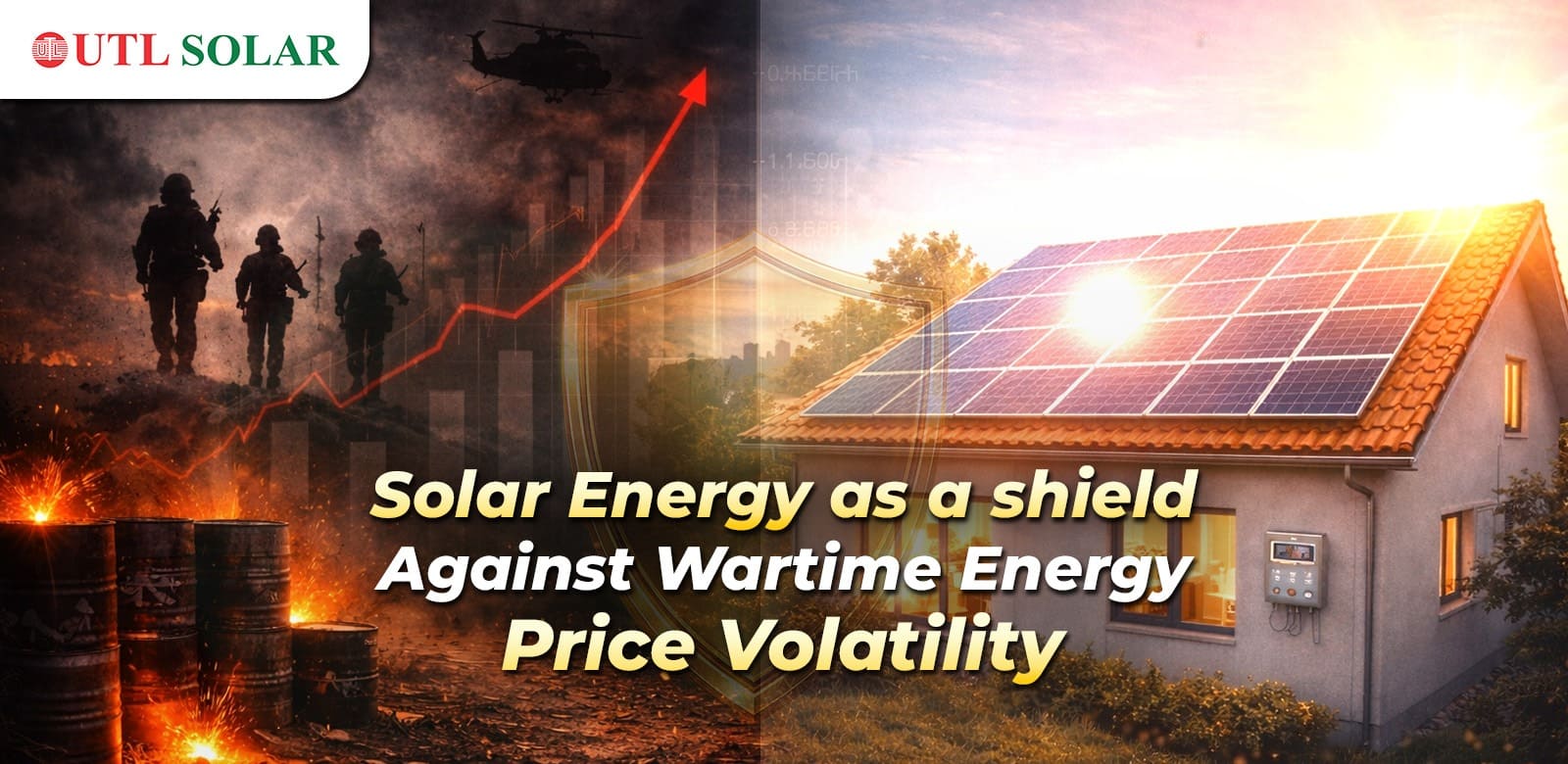
War extends its impact far beyond borders and political systems, disrupting the availability and affordability of essential resources such as energy. For countries like India, which rely significantly on imported oil, gas, and coal, conflicts often translate into sudden and sustained price pressures. These increases stem from disruptions to production, transportation networks, and global trade flows. In such periods of uncertainty, solar energy gains strategic importance. By enabling localized and predictable power generation, it reduces exposure to external shocks and helps both economies and households manage the impact of rising energy costs more effectively.
How Global Conflicts Distort Energy Pricing
Energy pricing during conflict is shaped by layered disruptions. Supply chains tighten as production risks rise. Transportation costs increase because movement itself becomes less efficient and more constrained. Shipping routes are often disrupted or avoided due to safety concerns, forcing energy supplies to take longer, less direct paths. This increases transit time, fuel consumption, and delivery delays.
As a result, even when supply is available, it reaches markets more slowly and at a higher cost. Sanctions add another layer of pressure by restricting access to major suppliers. Countries are pushed to source energy from alternative markets, often at higher prices and under tighter competition. Alongside these physical disruptions, financial activity intensifies. Prices begin to respond not just to actual supply and demand, but to expectations of future shortages. Currency depreciation further amplifies costs for import-dependent economies.
The Ripple Effect Across Economies
Energy costs do not remain isolated. They move quickly through the economic system. Higher fuel prices increase transportation costs, which in turn raise the price of goods and services. Manufacturing becomes more expensive, compressing margins or pushing inflation onto consumers. Governments are left balancing difficult trade-offs. Absorbing the shock through subsidies strains public finances, while passing costs to consumers increases economic pressure at the household level.
What begins as instability in energy pricing evolves into a broader challenge affecting growth, inflation, and financial stability.
Reclaiming Control Over Energy Costs
A key issue underlying this instability is control. When energy systems depend on imported fuels, prices are effectively determined outside national boundaries. Domestic stability becomes tied to external events—geopolitical tensions, trade restrictions, and market sentiment. This creates a structural limitation. Even with strong internal demand management, countries remain exposed to external price movements they cannot influence.
Shifting toward energy sources that are locally available changes this equation. It reduces reliance on global markets and allows a portion of energy costs to be determined internally rather than externally.
Predictable Energy in an Unpredictable World
Energy systems become unstable when their costs are tied to variables that cannot be controlled—global fuel prices, geopolitical tensions, and supply disruptions. Solar energy operates outside this cycle. It is built on a resource that is locally available, abundant, and unaffected by international conflicts. Sunlight is not traded across borders, nor is it influenced by political decisions or market speculation. In countries like India, where most regions receive ample sunlight for a large part of the year, this creates a reliable foundation for energy generation. The resource itself remains constant, even when external conditions are uncertain.
The predictability of solar energy comes from its cost structure. Unlike conventional sources that require continuous fuel purchases, solar systems rely on high-efficiency solar panels and advanced solar inverters. It allows for a one-time investment followed by long-term energy generation with minimal operating costs. Once installed, the cost of producing electricity remains largely unchanged over decades. This removes exposure to sudden price increases driven by global events. This stability directly addresses one of the biggest challenges during wartime or geopolitical crises—unpredictable energy expenses. While fossil fuel prices can fluctuate sharply within short periods, solar energy continues to generate power at a fixed, known cost. This creates financial certainty for governments, businesses, and households alike.
Strengthening Business Resilience
For businesses, energy cost uncertainty directly affects profitability and planning. Sudden price increases can disrupt operations, reduce margins, and delay investment decisions. In volatile conditions, managing energy risk becomes as important as managing demand. Solar adoption offers a practical way to address this challenge. By securing a portion of their energy needs at stable, predictable costs, businesses reduce exposure to external shocks. This enables more accurate financial forecasting and strengthens operational resilience.
Over time, stability in energy costs becomes a competitive advantage—particularly in industries where margins are sensitive to input fluctuations.
Protecting Households from Price Shocks
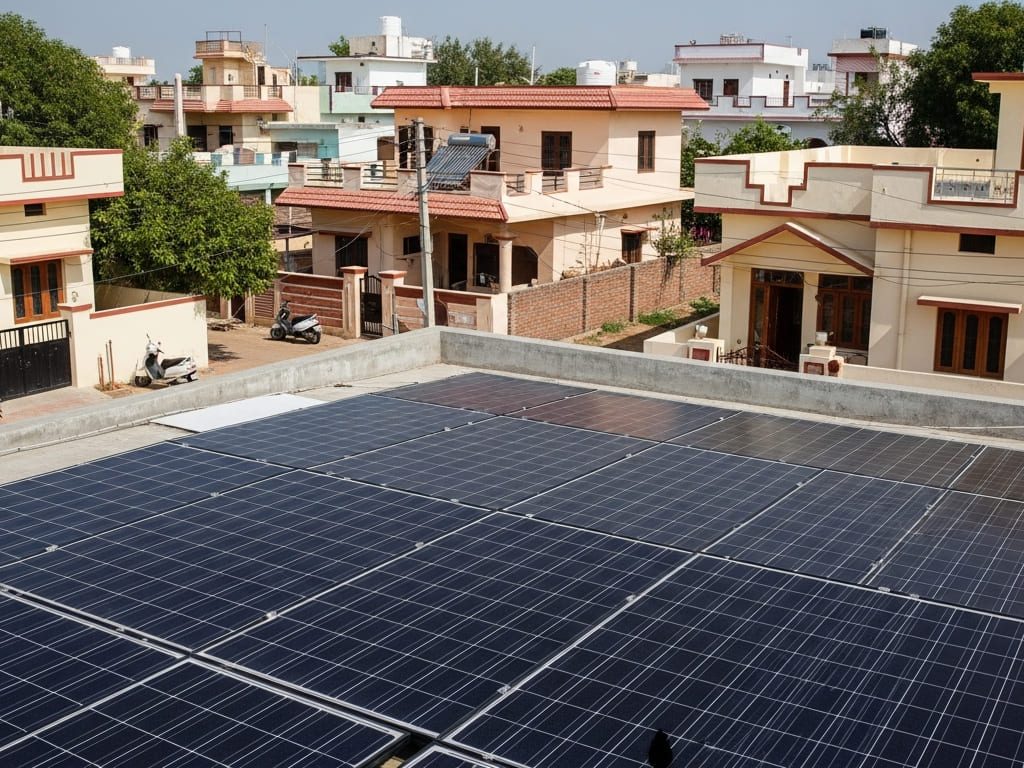
At the household level, energy price increases are immediate and visible. Rising electricity tariffs and fuel costs directly impact monthly expenses and contribute to broader financial stress. Solar energy provides a degree of insulation. By generating electricity locally, households reduce dependence on grid-based pricing, which is often influenced by fuel costs. This leads to greater control over long-term energy expenses.
Reliability vs. Cost Stability
Traditional energy systems are valued for their ability to provide consistent output. However, their costs remain subject to global market dynamics. This creates a gap between availability and affordability. Solar energy presents a different balance. While its output varies with natural conditions, its cost remains stable over time. This distinction is important. Reliability ensures that energy is available when needed. Cost stability ensures that it remains economically sustainable. In uncertain times, both dimensions become equally critical.
The Role of Storage and Smart Systems
Advances in storage technologies are enhancing the effectiveness of solar energy. Batteries allow excess generation to be stored and used during periods of lower output or higher demand. This reduces reliance on external sources during peak pricing periods. Smart energy management systems further optimize consumption patterns, aligning usage with periods of lower cost generation.
Together, these innovations strengthen both reliability and cost control to make solar-based systems more practical and resilient.
The Direction of Future Energy Systems
Energy strategies are evolving in response to increasing uncertainty. The focus is shifting from minimizing costs in stable conditions to managing risks in unstable ones. In this context, predictability is becoming a central consideration. Systems that offer long-term cost visibility are gaining importance, even if their upfront investment is higher. Solar energy aligns with this shift. It addresses not just environmental goals, but also economic and strategic priorities.
Closing Insight
In today’s world, where global conflicts can push energy prices up overnight, being able to manage costs is no longer optional but it’s essential. Countries need energy systems that don’t get shaken every time something changes in the global market. This is where solar energy starts to make a real difference. It shifts the focus away from constantly buying expensive, unpredictable fuel and toward a system where most of the cost is almost zero.
This change is not just about using cleaner energy. It’s about building a system that is more reliable and less dependent on outside factors. When energy doesn’t rely heavily on global fuel markets, countries, businesses, and even households gain more control over what they spend. In times of uncertainty, that kind of control matters. It helps economies stay steady and move forward, even when the global environment remains unstable.