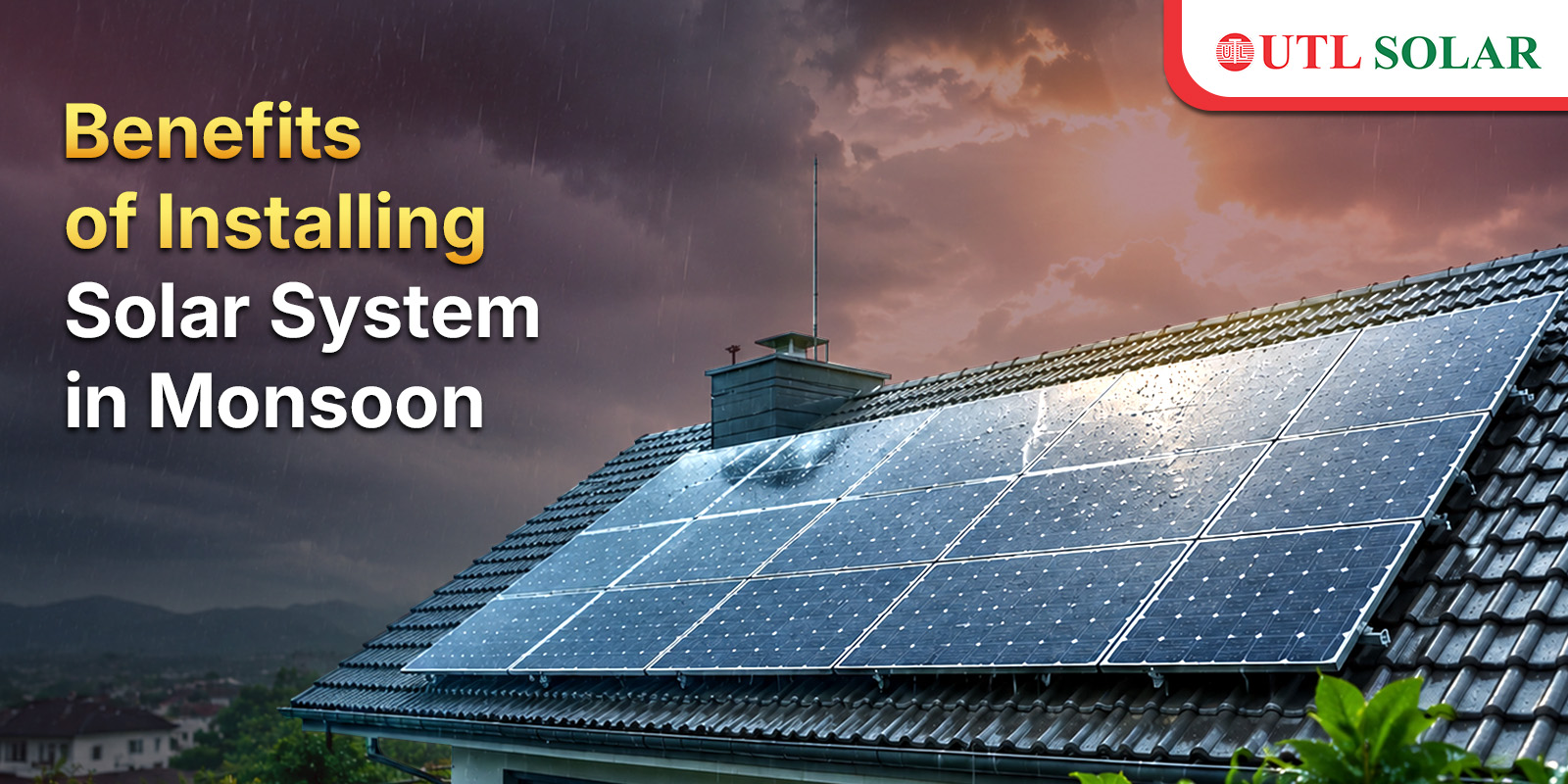
10 Benefits of Installing Solar System in Monsoon
Most people wait for the rains to pass before making the switch to solar. That instinct makes sense at first glance, but waiting means giving up several practical advantages that monsoon solar installation offers.
Here’s what actually matters. Every solar system will face a monsoon eventually. There’s no avoiding it across a 25-27 year lifespan. The only real decision is when it happens: on day one, while any weak point is still fixable under warranty, or a year later, after problems have had time to spread unnoticed. Installing during monsoon doesn’t add risk. It removes the guesswork.
And it’s not just about durability. Cost, installer availability, even how solidly the mounting structure sets, all of it shifts in the homeowner’s favor when demand drops and the season turns wet. Most people see the monsoon as a reason to wait. But in reality, it’s the opposite: it’s the smartest window to move first.
1. Greater Overall Savings on Your Solar Investment
Solar installation demand follows a predictable seasonal curve which peaks from October when clear skies make the decision feel more intuitive. That surge means installers are booked out, and pricing tends to hold firm because there’s no shortage of customers and leaves installers with less flexibility to negotiate project pricing or offer value-added services.
Monsoon reverses that dynamic. With significantly fewer bookings coming in, vendors have real incentive to offer discounted pricing or move inventory before the fiscal year closes.
For context: a 3kW on-grid system in India typically costs between ~₹1.5–2.1 lakh before subsidy. Even a modest ~10–15% off-season discount on a system that size translates to real savings of ~₹18,000–₹30,000. That’s on top of the ₹78,000 central subsidy already available under PM Surya Ghar Muft Bijli Yojana for residential on-grid solar system installation.
2. Faster Turnaround and More Dedicated Installer Attention
A lighter project queue has a direct, practical effect: shorter gaps between site survey, quotation, and commissioning. It also means installation crews aren’t splitting attention across multiple rooftops in the same week.
Consider the contrast during peak season when demand is highest, commonly reported multi-week waits just for a site assessment, before installation even begins. A monsoon booking sidesteps that queue entirely, and crews with fewer parallel projects are able to spend more time getting details like panel orientation, wiring routing, and mounting alignment right the first time.
3. Stronger Foundation Curing from Natural Moisture
For installations requiring concrete work, ground mounts or reinforced rooftop bases, the curing process depends on sustained moisture. Concrete that dries too quickly, as it often does in hot, dry months, cures unevenly and loses structural strength; installers frequently have to manually water it for days to compensate.
Monsoon provides that moisture continuously and without intervention. A structure’s foundation is what keeps a mounting system stable through 25+ years of wind load and weather exposure. So, the quality of the initial cure has long-term consequences most homeowners never think to ask about.
4. Natural, Cost-free Solar Panel Cleaning
Dust, pollen, and airborne grime accumulate on solar panel glass over time in a process installers call “soiling.” Depending on the region, this can reduce output by 5–15% before anyone notices the panels look dirty, it’s a gradual efficiency loss, not a visible fault.
In cities where dust and pollution levels are high year-round, this natural reset matters even more. Going into the high-output winter and summer months, it has a tangible effect on annual generation.
Although rainfall removes loose dust and surface dirt, it does not replace periodic professional cleaning, especially where bird droppings, tree sap, or stubborn grime accumulate.
5. Early Validation of Structural and Weatherproofing Integrity
A system installed under calm, dry conditions doesn’t get tested until the next monsoon arrives, often a full year later. Installing during the rains compresses that timeline: heavy rainfall, gusty winds, and high humidity all show up within weeks, not months.
But ratings on paper are different from performance on your specific roof. A loose mounting bolt, an imperfect seal, or a wiring issue surfaces immediately under real monsoon conditions. At that point, the system is still new and still under warranty, so the fix comes at no cost. Compare that to the alternative: the same issue going unnoticed for a year, until water damage has already spread.
6. Speedy Subsidy Approvals While Application Volumes Are Low
Subsidy processing under schemes like PM Surya Ghar Muft Bijli Yojana moves in step with how many applications are in the queue. During peak installation season, discom offices and empanelled vendors are handling a much larger volume of paperwork, which can stretch out verification and disbursement timelines.
Monsoon’s lower installation volumes mean fewer applications competing for the same approval bandwidth. That translates into quicker site verification, faster net-metering sign-off, and a shorter wait for the subsidy amount to actually land in your account.
7. Reduced Dependence on the Grid During Peak Outage Season
Monsoon is also when grid power tends to get less reliable. Heavy rain, waterlogging, and storm damage to transmission lines are common causes of unscheduled outages in this season. Also, many regions see a noticeable uptick in power cuts once the rains set in.
A solar system installed ahead of or during monsoon means your household isn’t fully dependent on grid supply through the season most prone to disruptions. Paired with net metering, it keeps essential appliances running even when the grid itself is having a rough month.
8. Optimal Readiness for Peak Summer Output
Monsoon is immediately followed by the two strongest generation windows of the Indian solar year, post-monsoon autumn and peak summer. A system installed, commissioned, and net-metered during the rains is fully operational and already fine-tuned by the time that high-output period begins.
The alternative, installing in November or December, during peak seasonal demand — often means losing several weeks to scheduling delays before the system is even live, missing real generation days during a period when every unit produced has maximum value. Since India’s grid electricity prices have risen an estimated 5–6% annually over the past decade, every week of delayed commissioning is a week of avoidable grid dependence at a rising cost.
9. Prepared Before Festival Season Electricity Bills Rise
Monsoon is quickly followed by India’s festive months, a period when household electricity consumption naturally increases. Guests visit more often, decorative lighting stays on for longer hours, kitchens work overtime, and cooling appliances continue to run through humid weather. All of this adds up to noticeably higher electricity bills at the same time household expenses are already rising.
Installing your solar system during the monsoon gives it enough time to be commissioned and generate electricity before this seasonal spike begins. Instead of entering the festival season with full grid dependence, your home already has a solar system offsetting a significant share of daily electricity consumption, helping keep bills under control when demand is at its highest.
10. Continuous Power Generation Through Diffused Sunlight
One of the biggest misconceptions about solar energy is that a solar system stops producing electricity whenever the sky is cloudy. In reality, solar modules generate electricity from sunlight, not just direct sunshine. Even on overcast days, sunlight passes through the clouds and reaches the earth as diffused sunlight. Although its intensity is lower than direct sunlight, it is still sufficient for solar modules to generate electricity.
This means your solar system doesn’t shut down during the monsoon. Instead, it continues producing power at a reduced output and runs household appliances while lowering your dependence on grid electricity.
Modern technologies like Mono PERC and TOPCon take this further. Their rear-surface design cuts down electron loss, which normally hits output hardest in low light. It helps these modules hold their efficiency better on cloudy days and make fuller use of diffused sunlight.
Why Rain Doesn’t Damage Solar Panels
Modern solar panels are engineered for outdoor use throughout the year. They are manufactured with:
- Tempered low-iron glass that withstands heavy rain and hail.
- Corrosion-resistant aluminium frames.
- Weather-sealed junction boxes and connectors.
- High IP-rated electrical components that prevent water ingress when installed correctly.
Together, these components are tested to standards like IEC 61215 and IEC 61730, which specifically simulate years of rain, humidity, and temperature swings before a panel is certified. So rain isn’t an edge case the system barely survives, it’s one of the conditions the panel is built and tested for from day one.
Common Myths About Monsoon Solar Installation
Monsoon comes with a lot of myths about solar, and not all of them hold up. Here’s what the facts actually say.
- Myth: Solar panels stop working when it rains.
Fact: Panels generate electricity from diffused sunlight even under cloud cover, just at reduced output, not zero output.
- Myth: Installing during monsoon damages the components
Fact: Monsoon conditions reveal weak points, loose bolts, poor seals, wiring issues, while the system is still new and under warranty.
- Myth: Rain causes electrical short circuits in solar systems.
Fact: Properly rated and earthed systems are built to handle rain exposure. This is precisely what IP ratings and earthing standards exist for.
- Myth: You should always wait for clear skies to install.
Fact: Waiting doesn’t reduce risk, it just delays when the system eventually faces its first monsoon, without the benefit of installer availability or lower costs.
End Note
A solar system is designed to generate electricity throughout the year, not just during clear summer days. While seasonal weather affects the amount of energy produced, installing your system during the monsoon allows it to start generating clean energy immediately and positions it to deliver maximum output when brighter weather returns.
The more useful question isn’t whether to wait for clearer skies, it’s how many weeks of savings and generation are lost by waiting at all.