Sine Wave vs Square Wave Inverters: What’s the Difference and Which One Should You Buy?
When it comes to buying an inverter, the checklist usually looks the same—battery size, VA rating, brand reputation, warranty, and of course, the price.
But there’s one technical detail that quietly determines how smoothly your appliances run, how long they last, and how efficiently they perform:
The waveform — Sine Wave or Square Wave.
Most users never look beyond the surface, and if you’ve also overlooked this part, don’t worry—you’re not alone. And you’re definitely not late. We’re here to simplify it for you.
What Are Waveforms and How Do They Impact Inverter Performance?
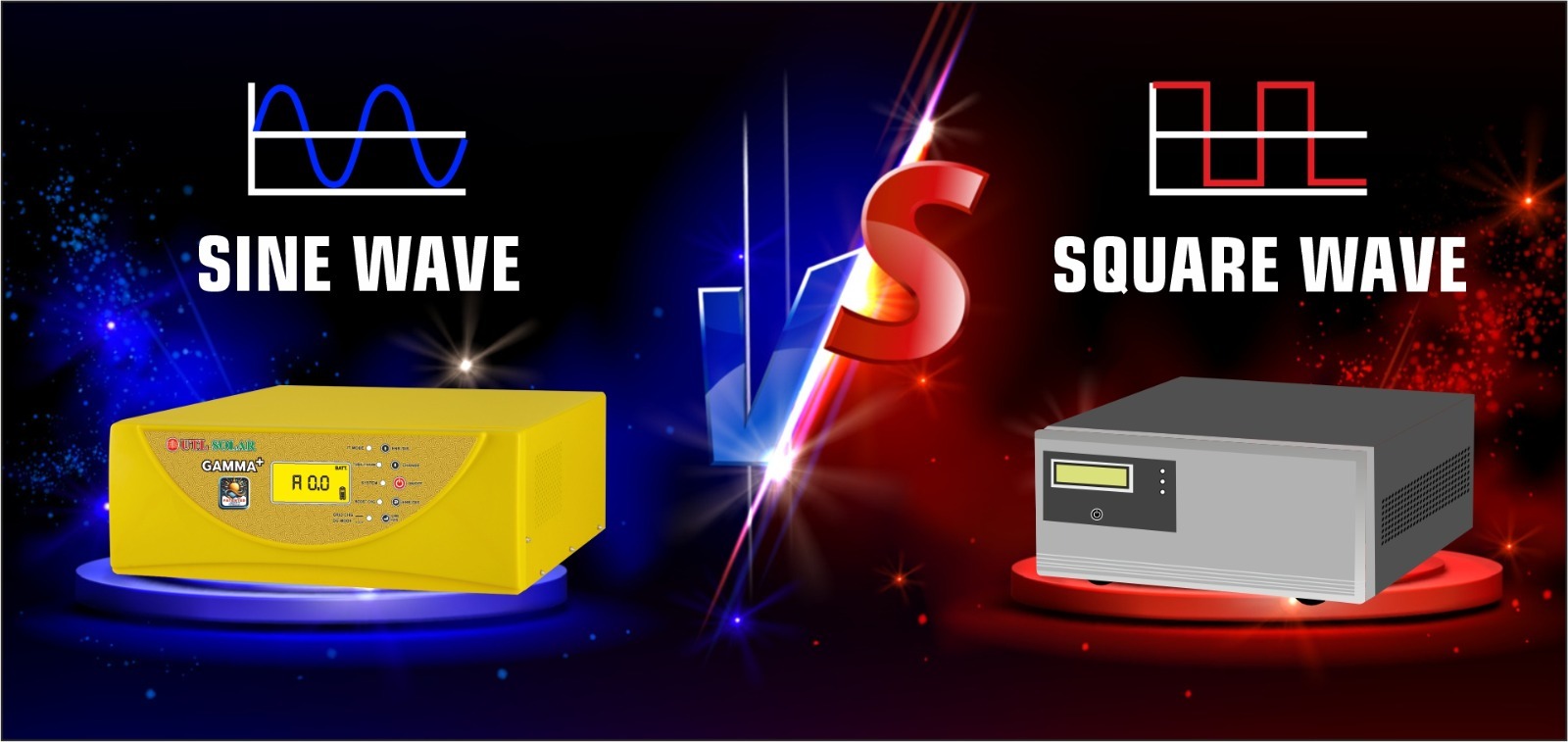
Waveforms are the shapes of the AC power an inverter produces, and they directly determine how smoothly your appliances run.
There are majorly two types of the waveform:
- Sine Wave: A smooth, grid-like power output that supports all types of appliances, including sensitive electronics.
- Square Wave: A basic, block-shaped output suitable for simple, non-sensitive devices.
Importance:
The waveform determines how efficiently, safely, and smoothly your appliances perform during backup power.
Square Wave Inverter: A Detailed Overview
A square wave inverter generates a basic square-shaped AC (Alternating Current) output, making it a budget-friendly choice for simple power needs. It is best suited for running non-sensitive, resistive loads such as lights, heaters, irons, and basic tools. While it provides dependable backup for low-demand applications, its waveform is not ideal for delicate electronics, which may experience noise or reduced efficiency.
Understanding how it works helps you determine where it fits best in real-world power scenarios. Let’s navigate below:
Key Features of Square Wave Inverter
- Budget-friendly
Built with a simple internal design, a square wave inverter is highly economical—perfect for those looking for basic backup power in less investment.
- Suitable for Basic Loads
A square wave inverter is ideal for users who want to power simple devices like bulbs, heating rods, kettles, and other uncomplicated appliances.
- Easy Installation
Its simple design makes the inverter easy to set up and maintain, ensuring hassle-free use. The lightweight and portable structure also makes it suitable for temporary setups, workshops, or basic off-grid tasks.
Sine Wave Inverter: A Detailed Overview
A sine wave inverter generates a smooth AC waveform that closely matches the power you get from the grid. This clean and stable output is safe for sensitive electronics, appliances with motors, and devices that need accurate voltage and frequency. As a result, appliances run quietly, efficiently, and with a longer lifespan.
A sine wave inverter works seamlessly with both basic and advanced devices, delivering consistent, high-quality power for reliable performance.
Key Features of Sine Wave Inverter
- Pure and Stable Power Output
This output waveform is almost similar to grid power, ensuring safe operation for sensitive devices like computers, refrigerators, and medical equipment.
- Compatible with All Types of Loads
Runs both resistive and inductive loads smoothly, including fans, pumps, mixers, and appliances with motors or compressors.
- Silent and Smooth Appliance Performance
Its smooth, grid-like output helps appliances run without humming or vibration, making it an ideal choice for users operating sensitive electronics, audio/video equipment, and medical devices.
- Higher Overall Efficiency
Delivers optimal output with minimal distortion, improving energy usage for both light and heavy appliances.
Sine Wave and Square Wave Inverters: Major/Key Differences
With the basics covered, here are the major distinctions that will guide you in choosing the inverter that fits your requirements:
| Aspect | Sine Wave Inverter | Square Wave Inverter |
|---|---|---|
| Nature of Power | Smooth, grid-like output | Basic, square-shaped output |
| Ideal Usage Environment | Homes, offices, studios, clinics | Workshops, small setups, rural needs |
| User Priority | Quiet performance & device protection | Great for users who prioritize affordability and only need to run basic appliances. |
| Supported Appliance | Suitable for sensitive and motor-based devices | Power devices that don’t need specific waveform accuracy. |
| Investment Approach | Suited for multiple device types. | An economical solution for essential, everyday power needs. |
Final Thoughts: Which One Should you Buy
Each inverter type serves a different purpose, so the best choice comes down to what you need to power. A sine wave inverter is ideal for steady, high-quality electricity, while a square wave inverter is a practical option for simple, everyday devices.
Look at the appliances you depend on and how you plan to use them—that’s what will guide you toward the inverter that fits your routine and expectations. In the end, the right inverter is simply the one that works best for your needs.
Further, If you want reliable, efficient, and long-lasting backup solutions, look no further than UTL Solar. We are the one stop solution for every solar need. Explore our wide range of solar products including inverters, solar panels, batteries and everything a reliable backup power requires.
Ready to upgrade your backup system? Choose UTL Solar products and bring reliable power into your everyday routine.