
300kW UTL Grid-Interactive Industrial Solar Power Plant
Engineered for an E-Vehicle Manufacturing Facility, Panipat, Haryana
As industrial electricity demand continues to rise, manufacturing facilities are increasingly adopting large-scale solar infrastructure to improve long-term energy efficiency, operational stability, and sustainability. To support these objectives, a 300 kW grid-interactive solar power plant was engineered and installed for an E-Vehicle manufacturing facility in Panipat, Haryana. The project was designed as a utility-scale solar installation focused on reliable energy generation, operational safety, and long-term performance durability.
The installation was developed using high-efficiency Mono PERC solar modules and industrial-grade three-phase string inverters to ensure stable energy production under demanding industrial operating conditions.
The installation was developed using high-efficiency Mono PERC solar modules and industrial-grade three-phase string inverters to ensure stable energy production under demanding industrial operating conditions.
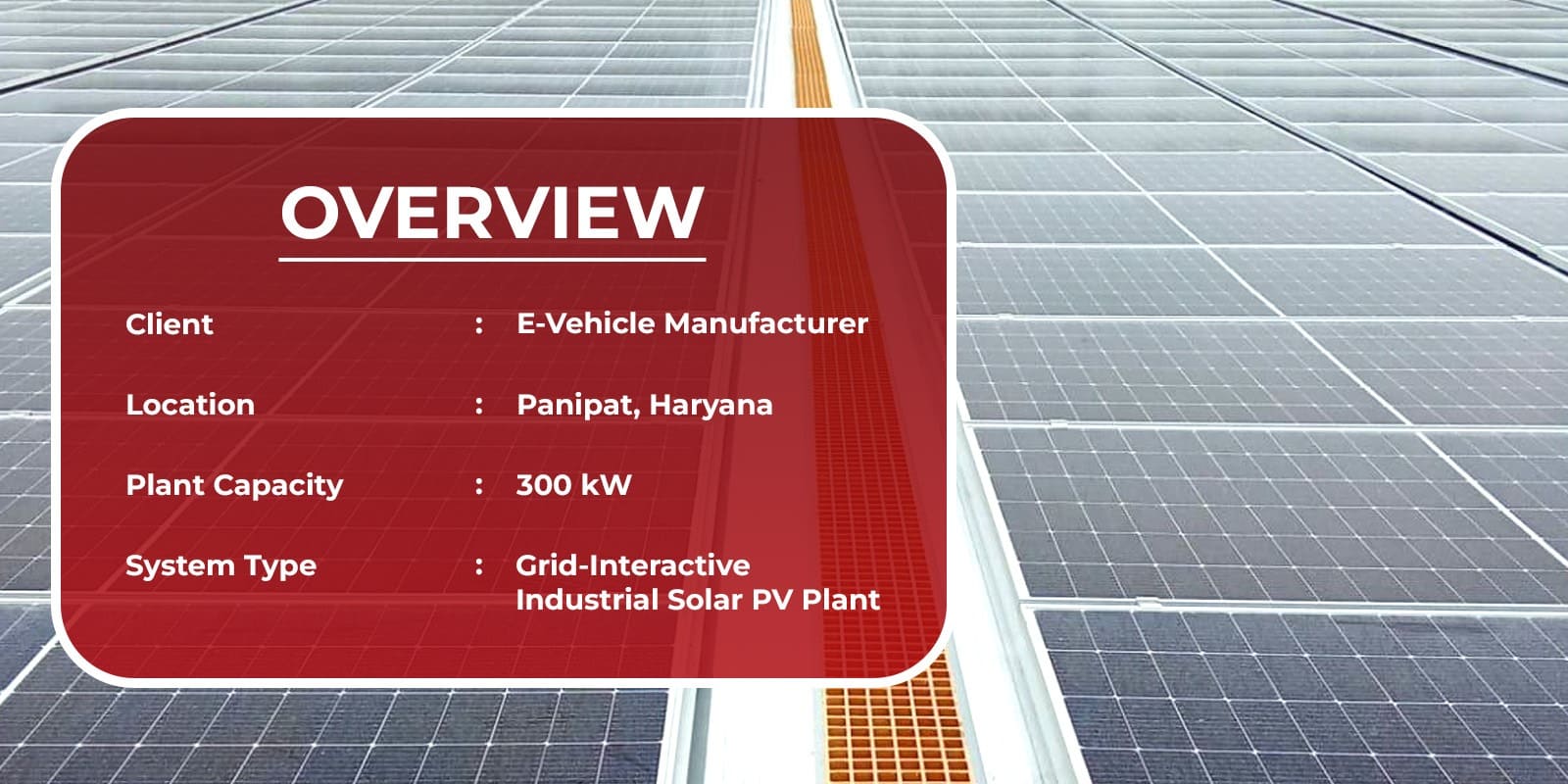
Project Overview
| Parameter | Details |
| Client | E-Vehicle Manufacturer |
| Location | Panipat, Haryana |
| Plant Capacity | 299.7 kWp (DC) |
| Total AC Capacity | 300 kW |
| System Type | Grid-Interactive Industrial Solar PV Plant |
| Roof Type | Tin Shed Industrial Structure |
| Total Solar Modules | 555 Nos |
| Total Inverters | 3 Nos |
| Inverter Rating | 100 kW Each |
| Module Tilt Angle | 6° |
Project Objective
The primary objective of the project was to establish a large-scale industrial solar power infrastructure capable of supporting the facility’s daytime operational energy requirements while improving long-term energy cost optimisation.
The system was designed with a strong focus on:
The system was designed with a strong focus on:
- High-efficiency energy generation
- Long-term operational reliability
- Industrial-grade safety standards
- Maintenance accessibility
- Low operational downtime
- Stable grid-interactive performance
Unlike conventional rooftop solar installations, the project required detailed engineering coordination due to the industrial operating environment and infrastructure accessibility limitations.
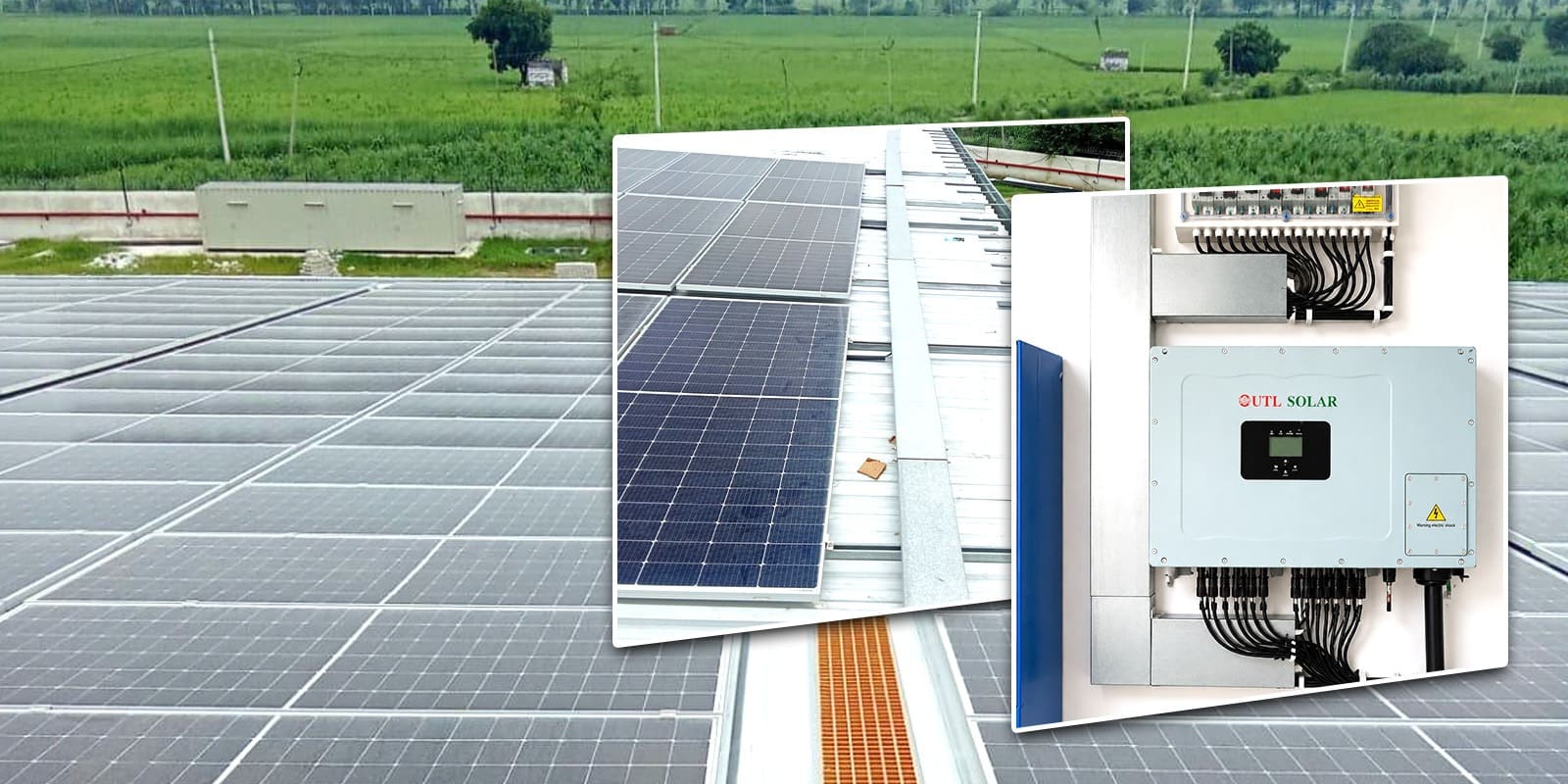
Site Execution Challenges
The installation involved multiple execution and infrastructure-related considerations that required careful engineering planning and coordination.
Key Site Challenges
- Roof access infrastructure was not available initially and required dedicated access planning.
- Industrial tin shed structural conditions required customised mounting and installation planning.
- Concrete cutting and repair activities were required for earthing implementation.
- Safe maintenance accessibility needed to be incorporated within the plant layout.
- Water infrastructure was required to support long-term module cleaning and maintenance operations.
Engineering & System Design
The utility-scale solar installation project was engineered using 555 high-efficiency 540 W Mono PERC solar modules integrated with three grid-interactive industrial inverters, each rated 100kW. The system architecture was designed to optimise energy harvesting while maintaining stable operational performance across varying industrial load conditions.
The module tilt angle and azimuth orientation were carefully planned to maximise solar exposure and generation efficiency for the installation site.
The project utilised:
- HDG mounting structure
- Industrial-grade AC/DC protection systems
- Dedicated earthing infrastructure
- Lightning protection arrangement
- Structured cable routing system
- Grid-interactive inverter architecture
Utility-grade Technology & Components Used in the Project
To ensure long-term operational stability and low maintenance requirements, the project utilised industrial-grade solar modules and high-efficiency inverter technology designed for continuous industrial operation.
High-Efficiency Solar Modules
The plant was installed using 540W Mono PERC solar modules engineered for long-term performance stability and durability.
Key Module Features
- PID-resistant Mono PERC technology
- AR-coated tempered low-iron glass
- Weatherproof IP68 junction box
- Corrosion-resistant anodized aluminium frame
- High mechanical durability
- Optimised low degradation performance
The modules are backed by a 27-year performance warranty, reinforcing long-term energy reliability and stable generation performance over the lifecycle of the plant.
Long-duration solar panel performance warranties are widely considered important indicators of low degradation rates and long-term generation stability in industrial solar projects
Long-duration solar panel performance warranties are widely considered important indicators of low degradation rates and long-term generation stability in industrial solar projects
Industrial Grid-tied Inverters
The project utilised 100 kW three-phase ongrid inverters engineered for stable high-capacity power conversion and industrial operating conditions.
Key Inverter Features
Key Features
- High MPPT efficiency up to 99% for improved energy harvesting
- Six MPPT trackers for better string-level optimisation
- IP65 protection for outdoor industrial environments
- Integrated Type-II AC & DC surge protection
- Smart cooling system with low noise operation
- Power export limiting support
- Easy installation and low maintenance design
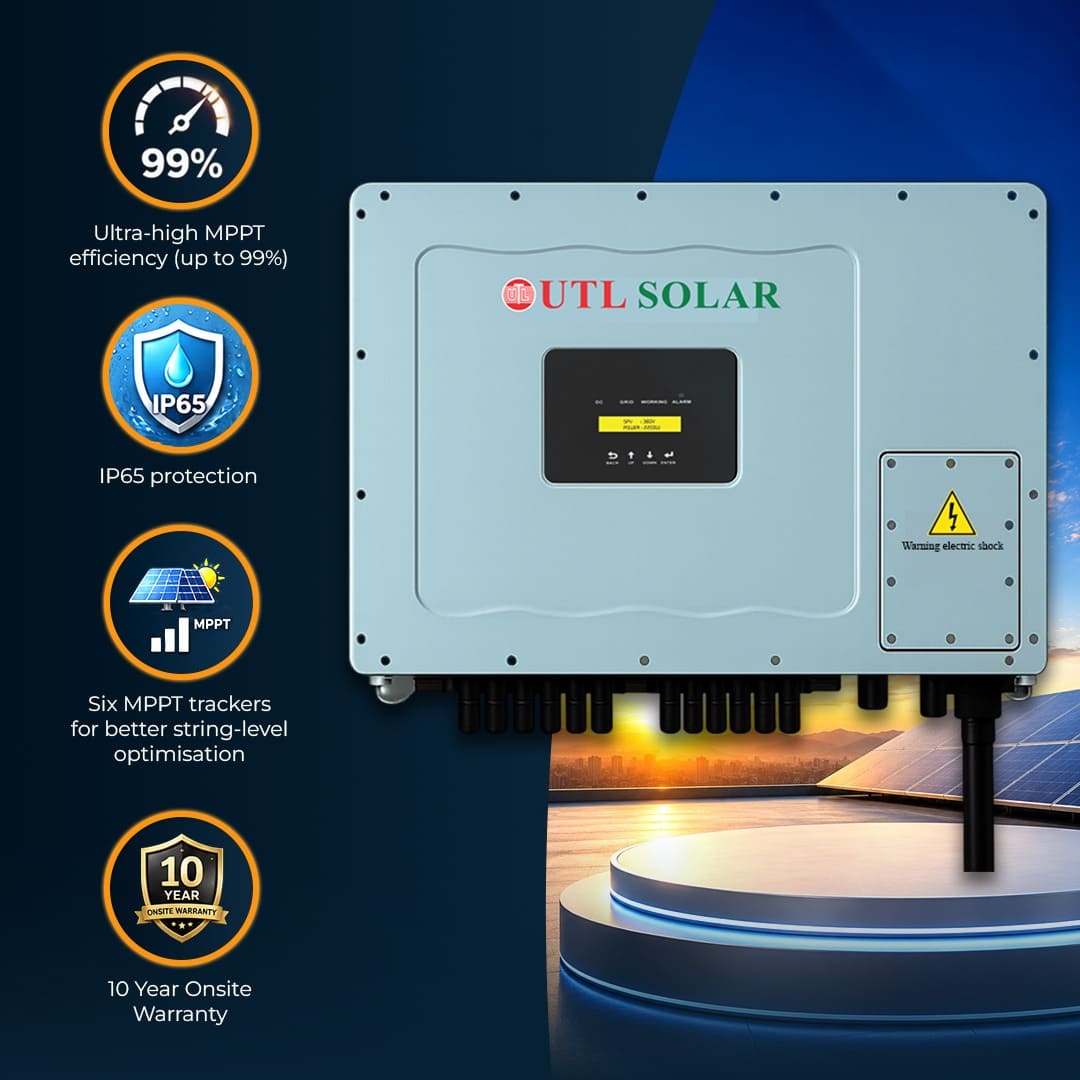
The inverters are supported by a 10-year manufacturer warranty, providing long-term operational assurance and reducing lifecycle maintenance risk. Across the solar industry, extended inverter warranties are increasingly viewed as indicators of higher manufacturing quality, long-term reliability, and stronger lifecycle performance.
Safety & Maintenance Infrastructure
The project incorporated dedicated maintenance and operational safety infrastructure to support long-term industrial plant operation.
Infrastructure Implemented
- FRP maintenance walkway system
- Industrial safety lifeline arrangement
- Dedicated ACDB protection system
- Structured cable management
- Earthing and lightning protection system
- Sprinkler-based solar module cleaning arrangement
The project also included provision for pressurised soft-water cleaning infrastructure to support efficient module cleaning and maintain long-term generation efficiency.
Operational Advantages
The installation provides multiple long-term operational benefits for the manufacturing facility.
Key Benefits
- Reduced dependency on conventional grid electricity
- Improved long-term operational energy efficiency
- Lower electricity expenditure during daytime operations
- Reliable industrial power generation
- Reduced maintenance requirements
- Enhanced infrastructure sustainability profile
- Long-term warranty-backed performance assurance
The combination of high-efficiency modules, industrial-grade inverter infrastructure, and engineered safety systems positions the plant as a long-term energy asset for the facility.
Conclusion
The 300 kW grid-interactive solar power plant installed at the E-Vehicle manufacturing facility in Panipat represents a utility-grade industrial solar infrastructure project engineered for reliability, safety, and long-term performance.
Designed using high-efficiency Mono PERC solar modules and industrial-grade grid-interactive inverter technology, the project demonstrates how large-scale industrial facilities can integrate clean energy infrastructure while maintaining operational efficiency and engineering reliability.
With a 27-year solar module performance warranty and 10-year inverter warranty, the plant has been developed as a long-term industrial energy solution focused on stable generation, operational continuity, and lifecycle value creation.