Top 10 Types of Solar Panels in India: Which One is Right for You?
The solar landscape in India has changed a lot over the past decade — and not just in how many rooftops are going solar, but in what’s actually possible with solar panels.
A few years ago, residential rooftop systems were mostly built with basic modules that offered modest efficiency and little room for performance upgrades. Today, advancements in solar cell technology — from PERC and half-cut designs to TOPCon and bifacial panels — have opened up options that deliver more electricity in the same rooftop area and perform better in heat and low-light conditions.
This matters in India because rooftop space is often limited, and higher-efficiency panels can generate more power with fewer modules. Beyond just kilowatts, modern panels help homeowners and businesses maximize returns and make solar a more practical investment for every roof type.
In this guide, we’ll walk through the top solar panel technologies available in India today, compare their strengths and weaknesses, and show you how to pick the best fit for your energy needs and rooftop space.
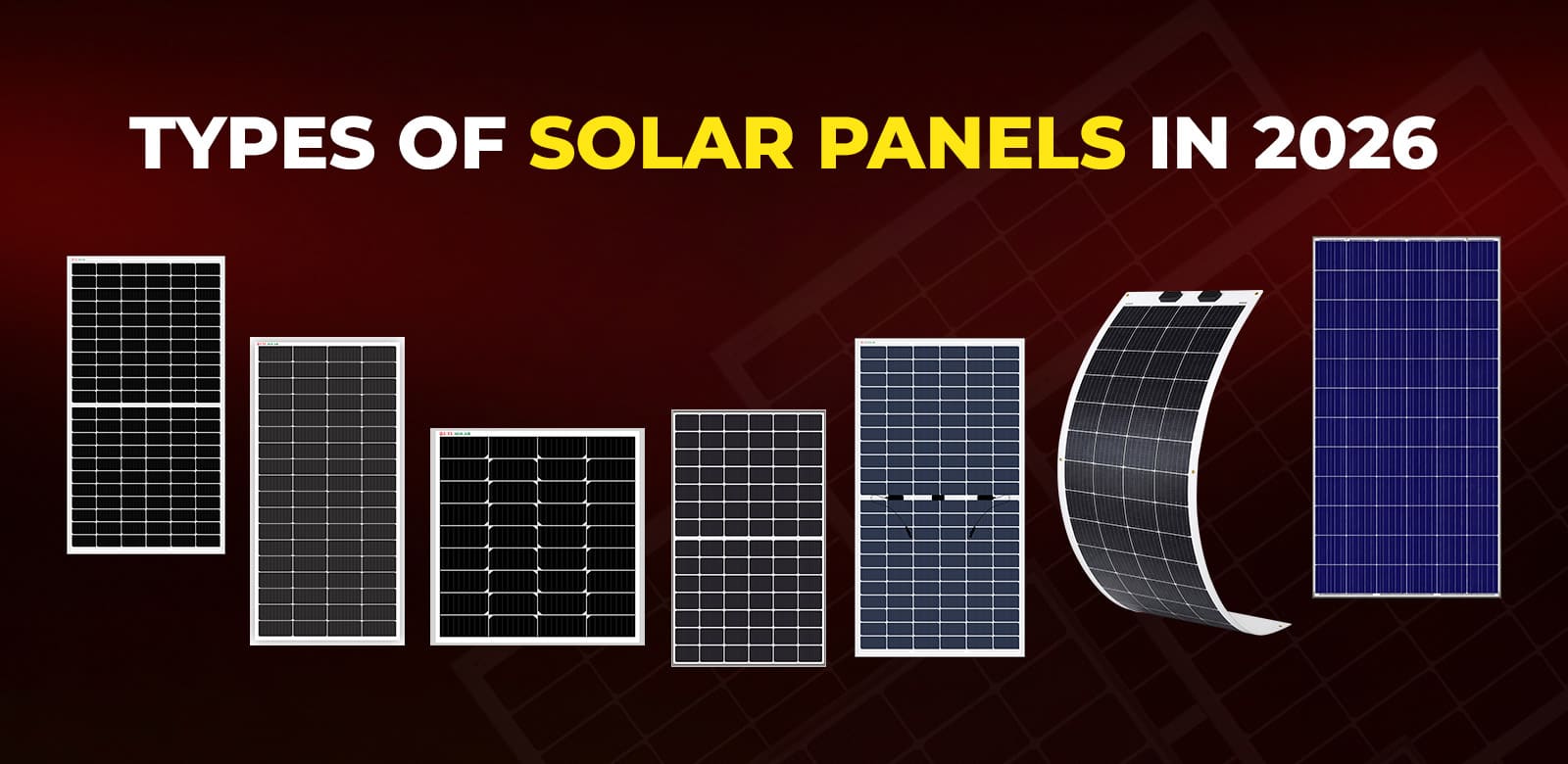
1. Polycrystalline (Poly) Solar Panels
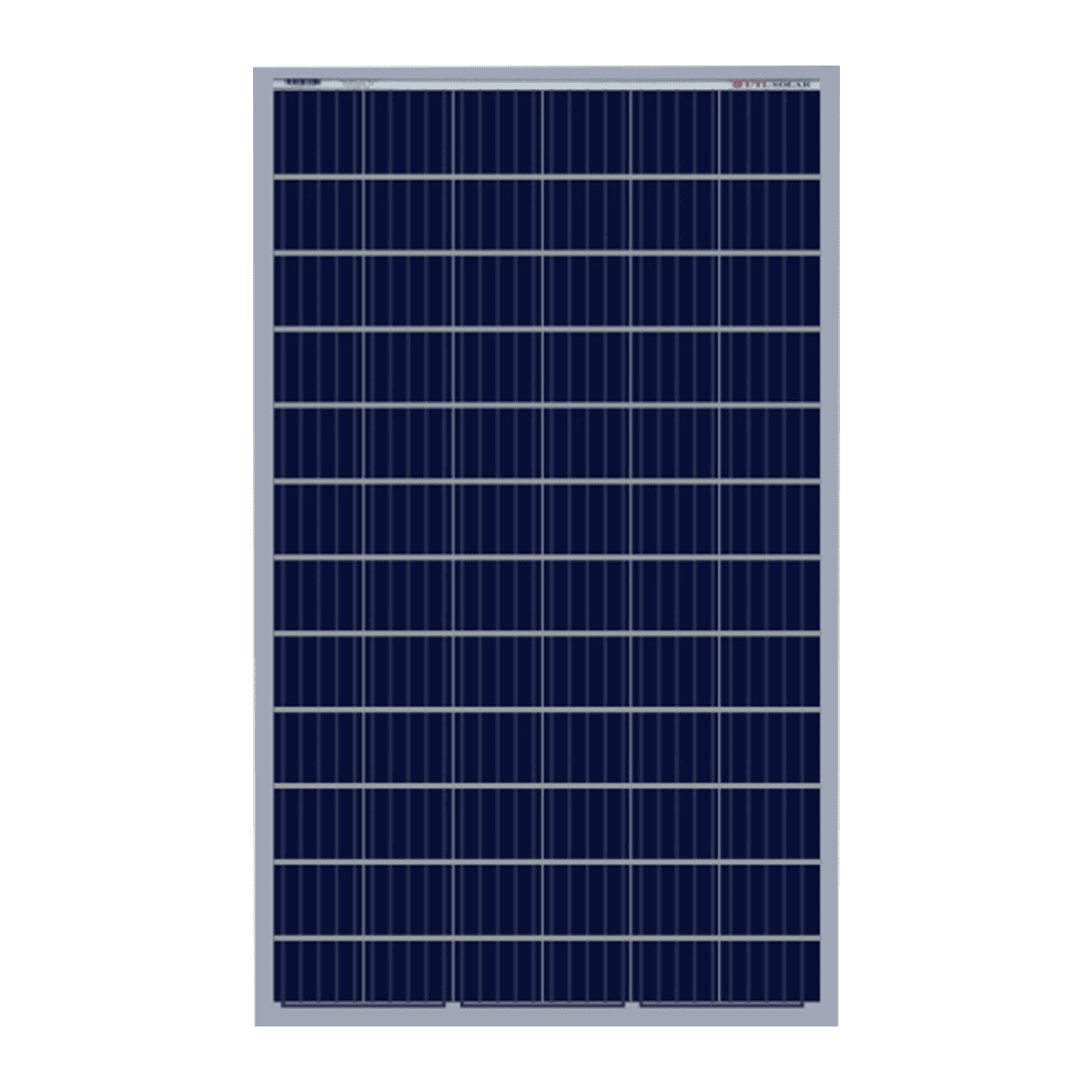
Poly panels are the most basic and cost-effective solar modules, easily recognized by their light blue, square-shaped cells. With lower electricity output per panel compared to higher-efficiency modules, more panels are required to generate the same power.
* Efficiency: – 13%-17%
* Price Range: ₹17–₹20 per W
Polycrystalline panels are ideal for villages and large roofs specially when the space is ample and the cost matters more than efficiency.
2. Monocrystalline (Mono) Solar Panels
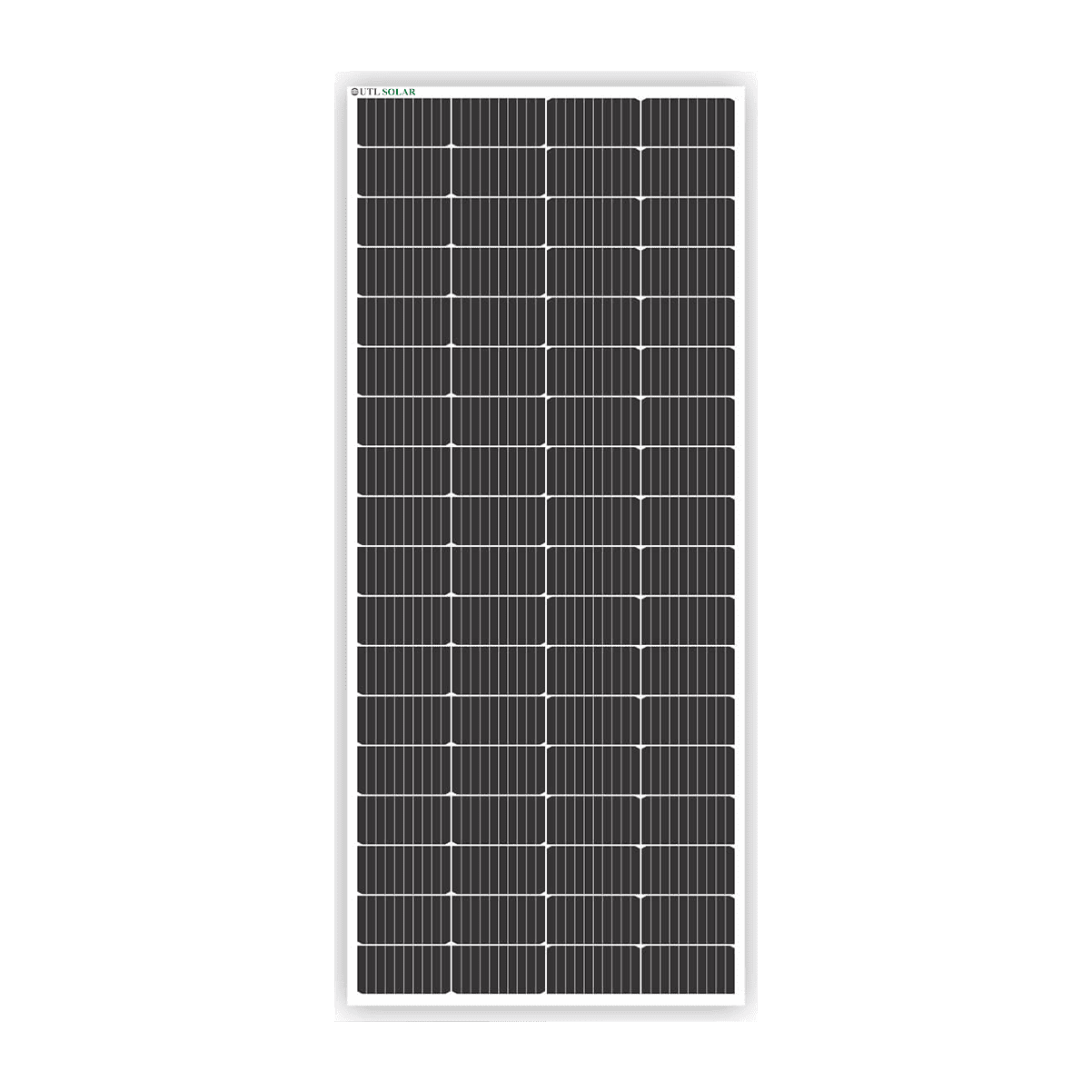
Higher efficiency helped mono panels gain popularity after poly panels. Their dark blue cells feature cut corners, which give them a distinctive diamond-shaped appearance. Their unique shape allows them to capture more sunlight and generate higher power output than poly panels. Mono PV panels are generally manufactured with a single piece of silicon, which allows them to smoothly manage the electricity flow.
* Efficiency: 18–20%
* Price Range: ₹20–₹22 per W
With pure single-crystal silicon cells, these panels achieve higher efficiency and smoother electron movement. This helps them maintain consistent power generation even during low-light conditions. They are perfect for limited rooftops where every inch of rooftop counts because they produce more power using less space.
3. Mono PERC Solar Panels
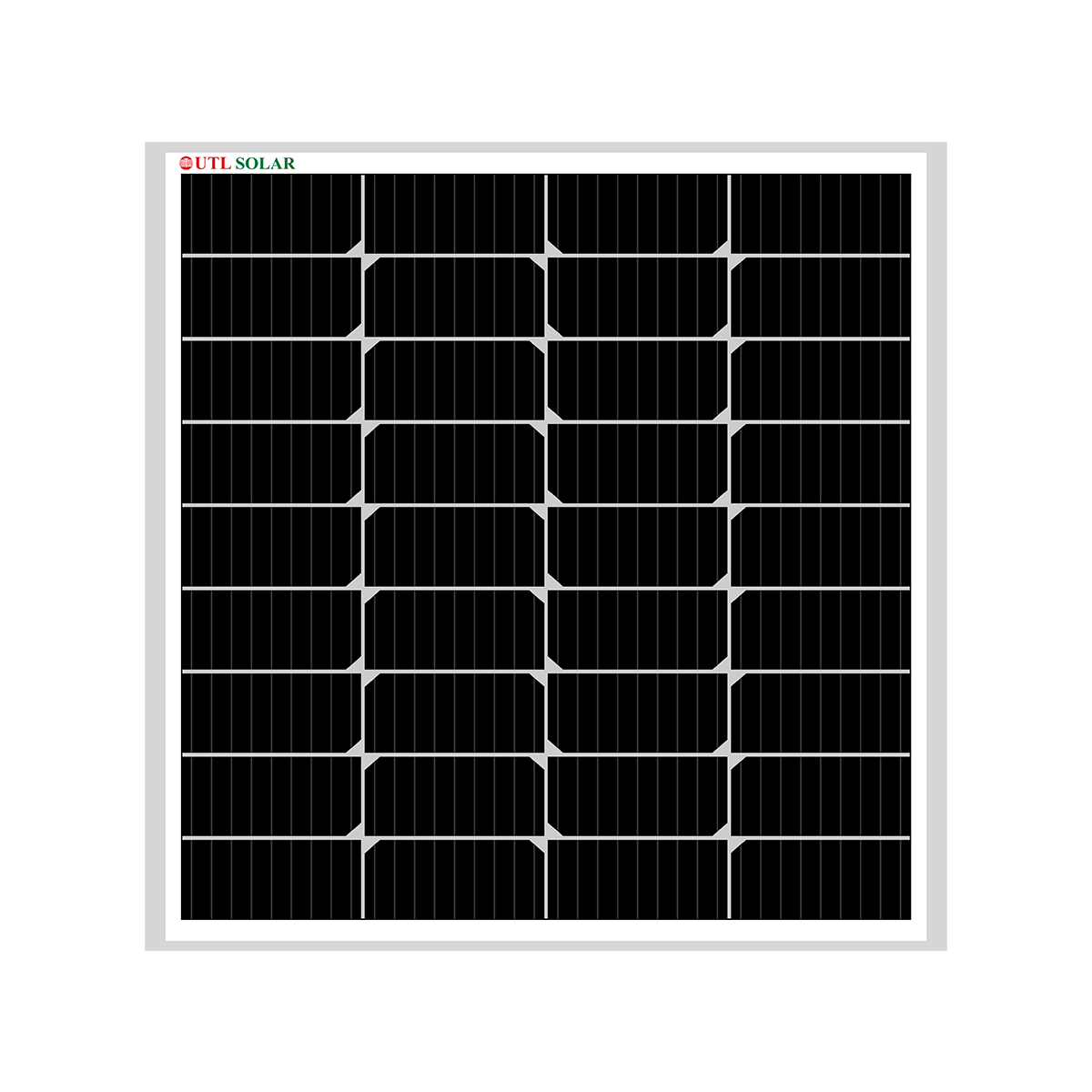
Mono PERC solar panels are the advanced version of the mono modules with an extra layer on the back which allows them to capture more sunlight to produce extra power. This design helps reduce power losses and enables better electricity generation, even during low-light conditions or high temperatures. Mono PERC panels are commonly used in places needing higher energy generation like residential rooftops, commercial installations, and large-scale solar projects.
* Efficiency: 21–22%
* Price Range: ₹22–₹25 per W
Advantages:
- Better electricity generation in cloudy or low-light conditions.
- Higher efficiency than standard mono panels.
4. Half-Cut Solar Panels
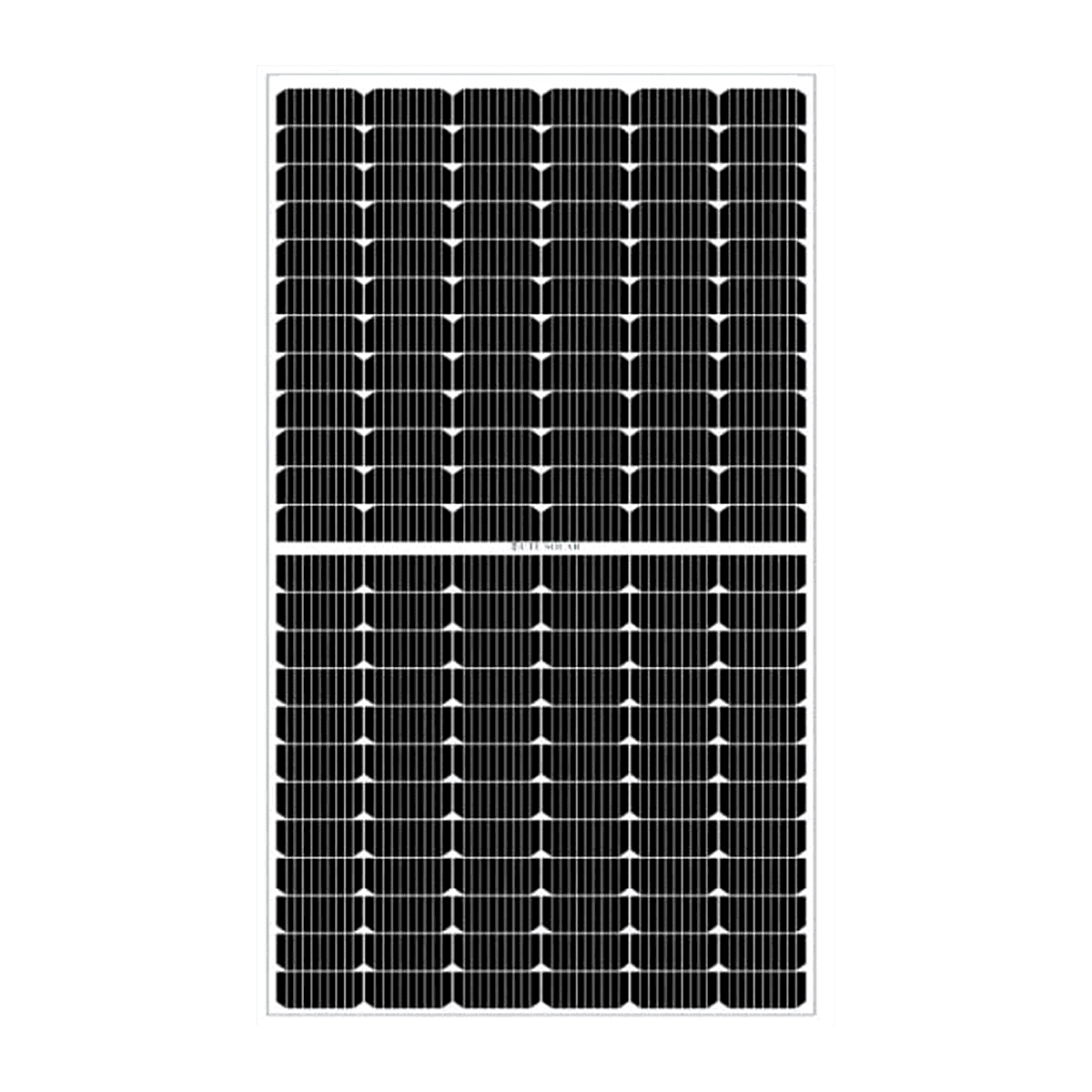
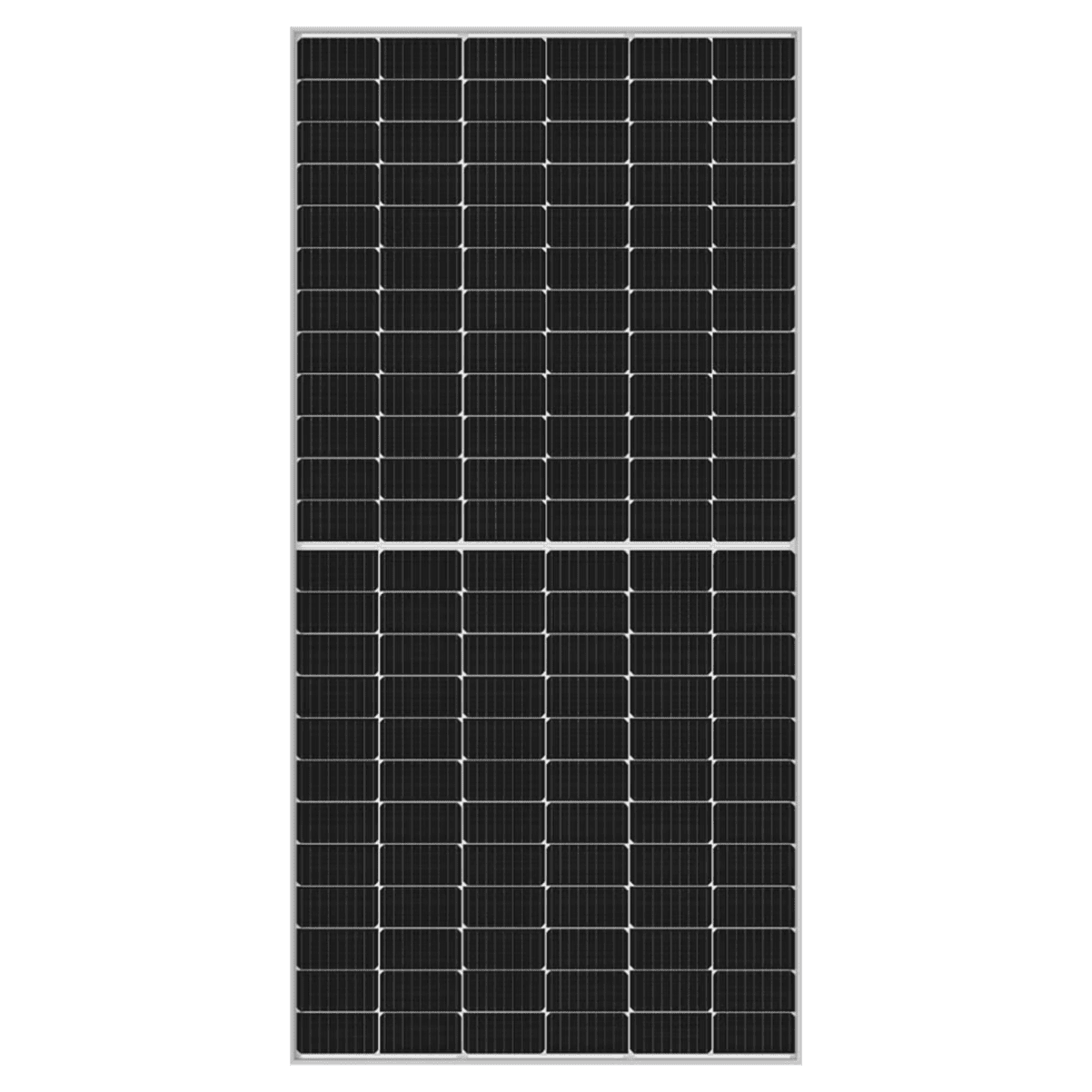
These types of panels use half-cut cells which reduce current and power loss. Half-cut design divides the panel into two different sections, which makes the panels more resistant to partial shading and improves overall performance.
* Efficiency: 21–22%
* Price Range: ₹22–₹25 per W
Advantages:
- Better Performance in Shade: The split-panel design limits power loss when part of the panel is shaded, ensuring more consistent output.
- Improved Heat Tolerance: Lower operating temperature helps maintain performance in hot climate conditions.
5. Bifacial Solar Panels
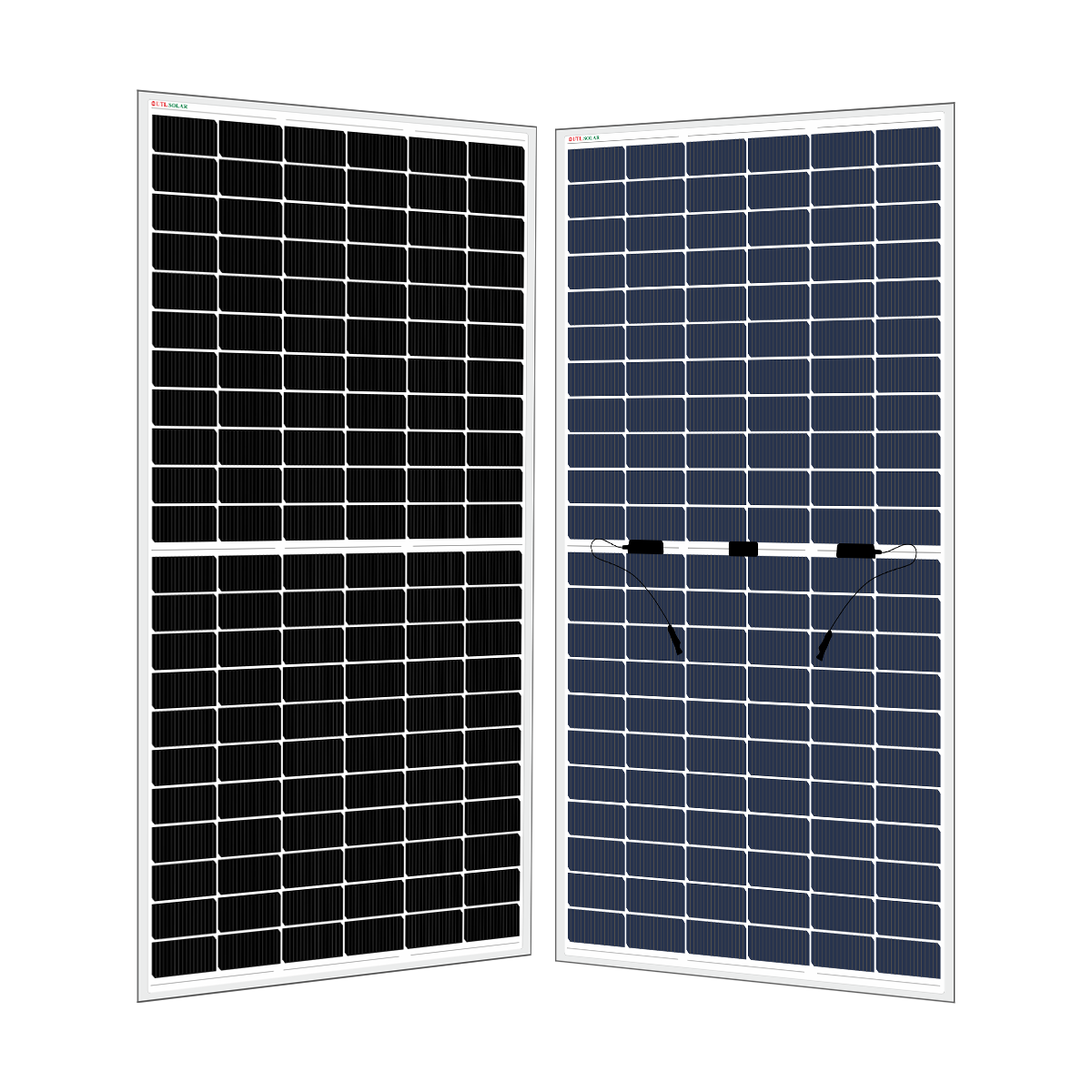
These kinds of solar panels efficiently capture sunlight from both sides (front & back) of the solar modules and also absorb the reflected light from the surfaces like rooftops, concrete, or the ground below. This dual-sided light absorption allows bifacial panels to generate more electricity than conventional single-sided panels.
* Efficiency: 22–23%
* Price Range: ₹23–₹25 per W
Advantages:
- Better Use of Reflected Light: Gains extra energy from rooftops and surrounding surfaces.
- Durable Build: Dual-glass design improves strength and lifespan.
6. TopCon Solar Panels
TopCon (Tunnel Oxide Passivated Contact) solar panels represent one of the most advanced technologies currently available in the solar market. They build on traditional monocrystalline cell design by adding a specialized PV layer that reduces energy loss and improves the flow of electrons within the cell.
* Efficiency: ~23%
* Price Range: ₹16 to ₹33 per watt
Advantages:
- High Wattage Capacity: Generates more power with fewer panels, ideal for both rooftops and large installations.
- Better Performance in Heat: Maintains stable output even in high-temperature conditions.
7. Flexible solar panels
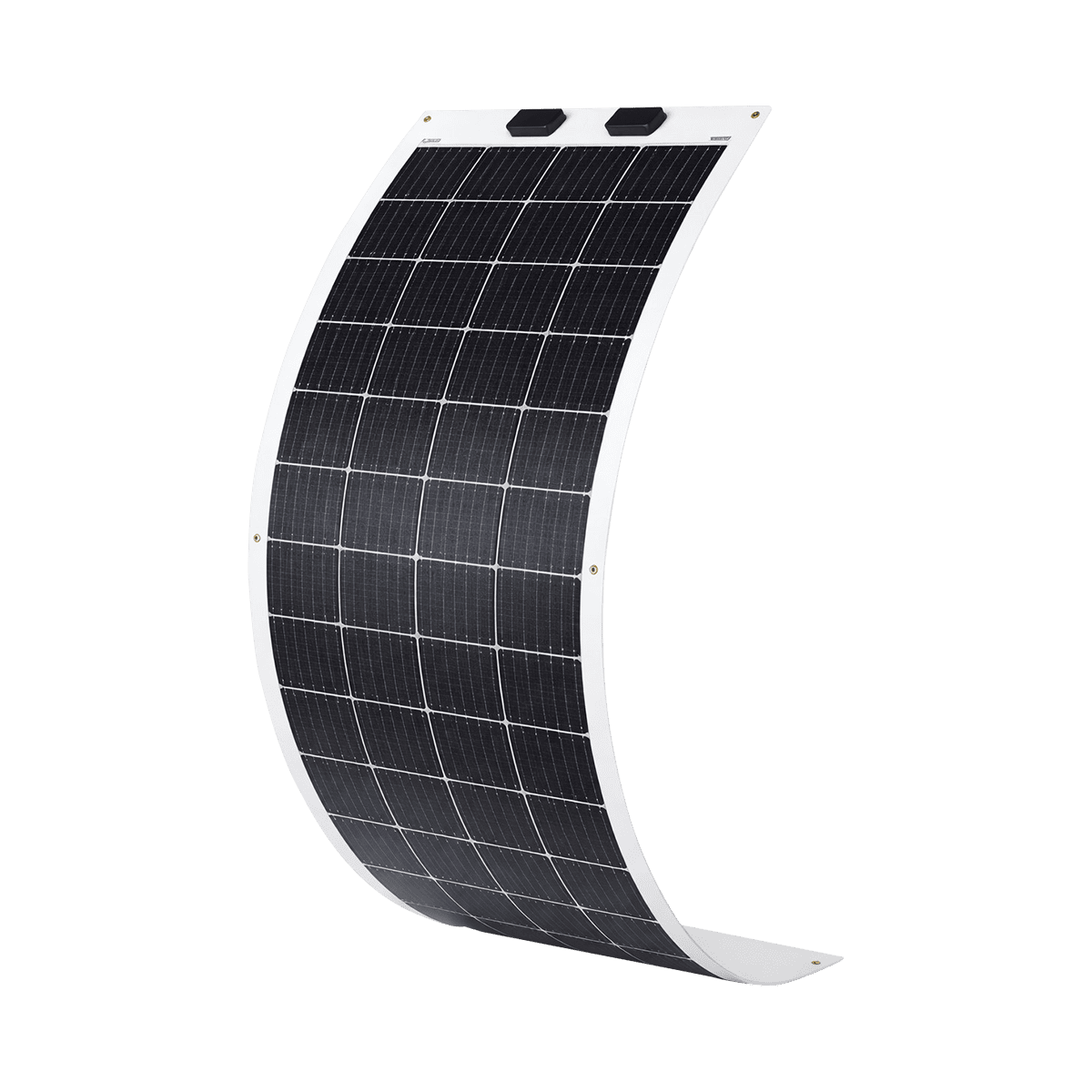
Flexible solar panels are lightweight and bendable. With its flexible design, these modules offer unmatched adaptability while maximizing energy absorption. This makes them ideal for applications where traditional rigid panels are not practical. They are commonly used on caravans, boats, tents, metal sheds, and other temporary or mobile structures.
As these solar modules are easy to install, they generally offer lower efficiency and contain a higher risk of damage compared to traditional panels. So, it can be a good choice for specific portable use only.
* Efficiency: 15–18%
* Price Range: ₹40–₹80 per W
Advantages:
- Lightweight and Flexible: Can be installed on curved, uneven, or weight-sensitive surfaces where rigid panels are not suitable.
- Easy Installation: Requires minimal mounting hardware, making installation quick and simple.
- Portable: Ideal for mobile and temporary applications such as caravans, boats, tents, and sheds.
- Low Structural Load: Adds very little weight, reducing stress on roofs and supporting structures.
8. Building-Integrated Photovoltaic (BIPV) Panels
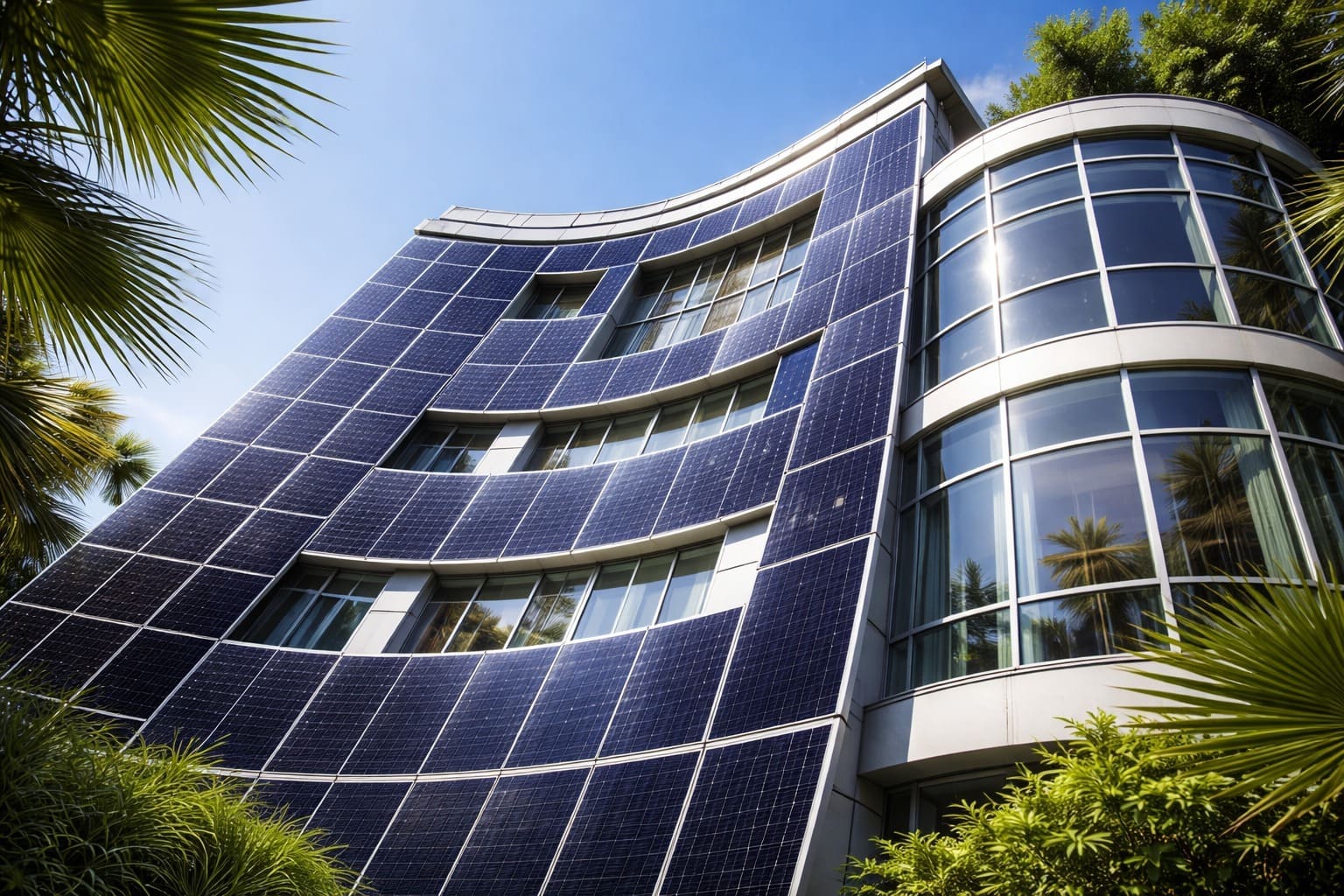
BIPV panels are solar solutions that are seamlessly integrated into building materials such as rooftops, façades, skylights, or windows. These panels are commonly used in modern homes, commercial buildings, and premium projects where appearance and functionality are equally important. While they offer a clean, aesthetic look and efficient use of space, BIPV systems usually come at a higher cost and require careful planning during the building design stage.
* Efficiency: 15–22%
* Price Range: ₹70–₹150 per W
Advantages:
- Aesthetic Integration: Blends seamlessly into the building design, maintaining a clean and modern appearance.
- Dual Purpose: Acts as both a building material and a power-generating system, reducing the need for separate installations.
- Efficient Use of Space: Ideal for projects where rooftop or façade space must serve multiple functions.
- Design Flexibility: Available in various formats such as glass, tiles, and façades to suit architectural requirements.
9. Heterojunction (HJT) Solar Panels
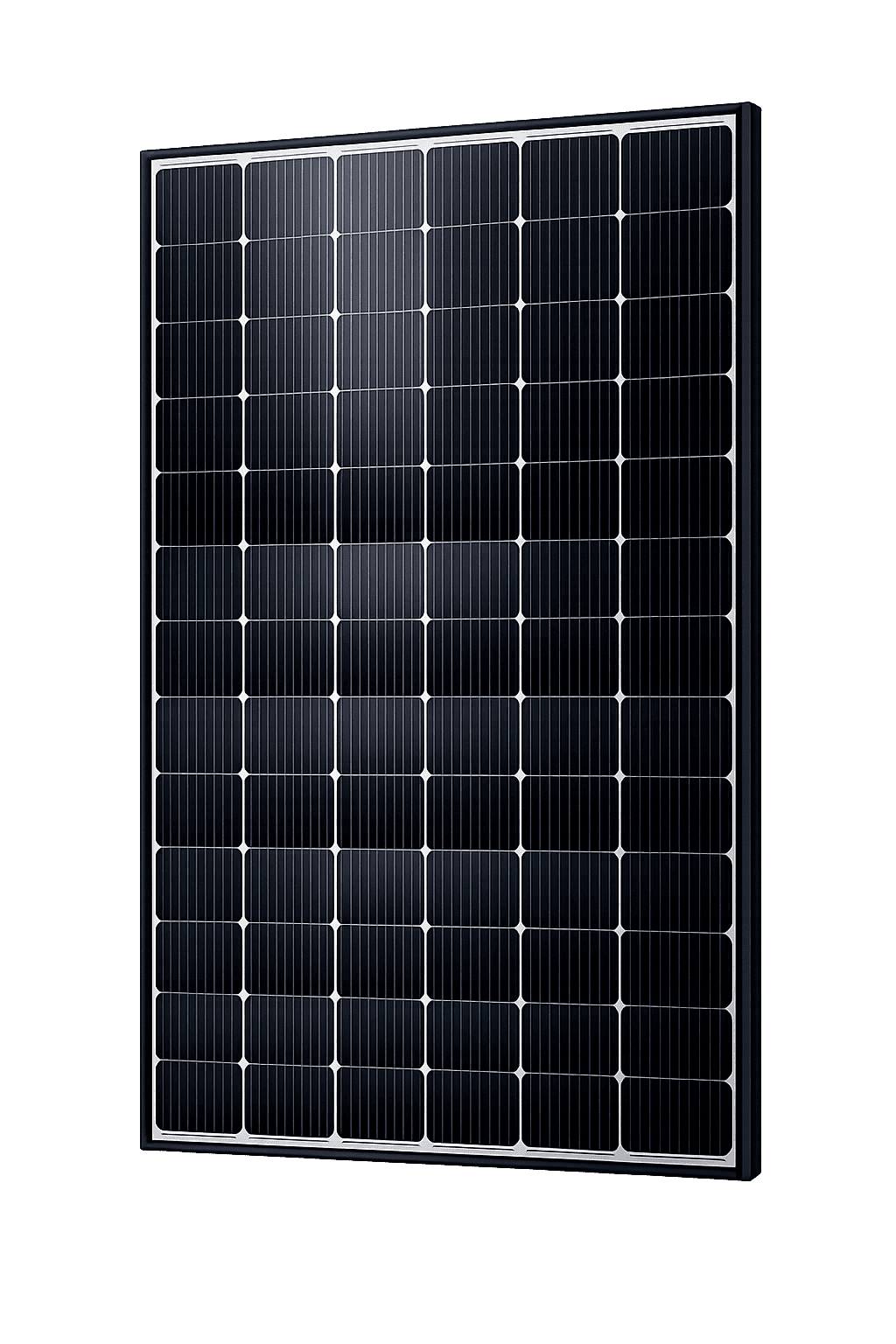
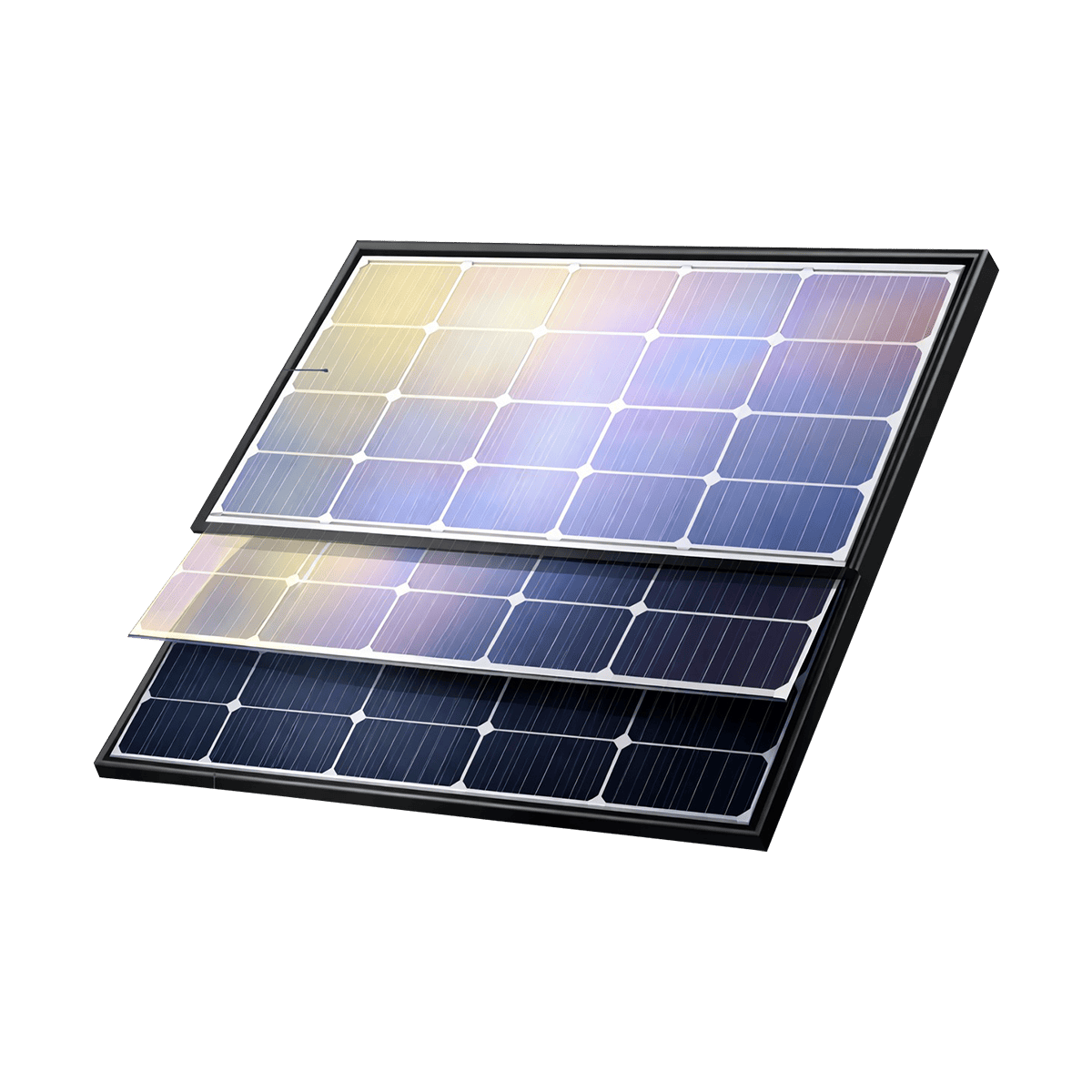
Heterojunction solar panels are made with two types of silicon technologies, like crystalline silicon and thin-film amorphous silicon, to create highly efficient solar cells. This layered structure reduces energy loss, improves light absorption, and enhances performance even in high-temperature conditions. HJT panels are suitable for residential, commercial, and industrial rooftops where efficiency and long-term reliability are priorities. They also offer excellent low-light performance and minimal degradation over time.
* Efficiency: 23–26%
* Price Range: ₹28–₹35 per W
Advantages:
- Highest Efficiency: Among the most efficient solar panels available in the market.
- Low Degradation: Maintains output for longer periods with minimal performance loss.
- Excellent Low-Light Performance: Generates power effectively even in cloudy or shaded conditions.
- Temperature Resistant: Performs well in hot climates without significant efficiency loss.
10. Tandem Solar Panels
Tandem solar panels combine multiple layers of solar cells with different light absorption properties. It helps panels to capture a broader spectrum of sunlight. By stacking two or more types of cells, these panels significantly improve energy conversion efficiency compared to conventional single-junction panels.
Tandem panels are ideal for residential, commercial, and large-scale solar projects where maximizing output from limited rooftop or ground space is a priority. They are also well-suited for areas with variable sunlight conditions, providing stable performance throughout the day.
* Efficiency: 28–30%
* Price Range: ₹35–₹45 per W
Advantages:
- Ultra-High Efficiency: Converts more sunlight into electricity than traditional panels.
- Better Low-Light Performance: Generates power even during cloudy or overcast days.
- Space-Saving: Higher energy output per panel reduces the total number of panels needed.
- Advanced Technology: Offers long-term reliability and optimal performance for premium installations.
DCR vs Non-DCR Solar Panels: Key Differences Explained
DCR (Domestic Content Requirement) solar panels are manufactured using cells and modules produced in India. These panels are mandatory for government-supported projects and residential installations that fall under subsidy schemes such as PM Surya Ghar or state solar programs.
Non-DCR solar panels are typically imported or use imported cells. They are commonly used in commercial, industrial, and private projects where subsidies are not involved, as they often offer a wider range of technologies and higher wattage options.
Key Differences at a Glance:
- Eligibility: DCR panels are required for government subsidy projects, while non-DCR panels are used for non-subsidy installations.
- Cost: DCR panels are usually priced slightly higher due to local manufacturing requirements.
- Performance: Non-DCR panels generally provide higher efficiency and wattage, while DCR panels focus on compliance and reliability.
If you are planning to avail of government subsidies, DCR panels are mandatory. For private or commercial installations where subsidies are not required, non-DCR panels offer greater flexibility in technology and performance.
End Note
Choosing the right solar panel in India today goes beyond just selecting a brand or a type. With advancements in technology like TOPCon, bifacial, and higher-efficiency panels, homeowners and businesses can now maximize power generation even in limited rooftop space. Modern panels not only deliver better electricity output but also perform reliably under high temperatures and low-light conditions to ensure long-term returns on investment.
By focusing on high-efficiency solutions, such as TOPCon and other advanced technology modules, you can optimize your energy production while making the most of every square meter of your roof.
Ready to power your home or business with the best solar technology available? Explore the wide range of solar products at UTL Solar. Take control of your energy bills today! Get a free consultation from our experts and discover how much you can save by switching to high-efficiency solar panels. Start generating reliable power for your home or business now.