Solar Panels Not Giving Good Output? Here’s What You Can Do
Solar energy promises cleaner power, reduced electricity bills, and a smart long-term investment. But what if your solar panels suddenly stop giving good output or never generated as much as you expected?
You’re not alone. Thousands of homeowners face the same issue.
The good news? Most low-generation problems can be fixed with simple steps, without replacing your solar system.
In this detailed guide, we’ll walk you through:
- Why your solar panels produce low output
- How dust, shade, wiring, MPPT settings, and tilt affect power
- What you can do today to increase generation
- When you should call a technician
- Easy maintenance habits to keep your solar performing at peak levels
Let’s dive in.
Why Are My Solar Panels Not Giving Good Output?
Solar panels are designed to convert sunlight into electricity. Anything that reduces the amount of light reaching the panel—or interferes with energy flow—will reduce output.
Common reasons include:
- Dust and dirt buildup
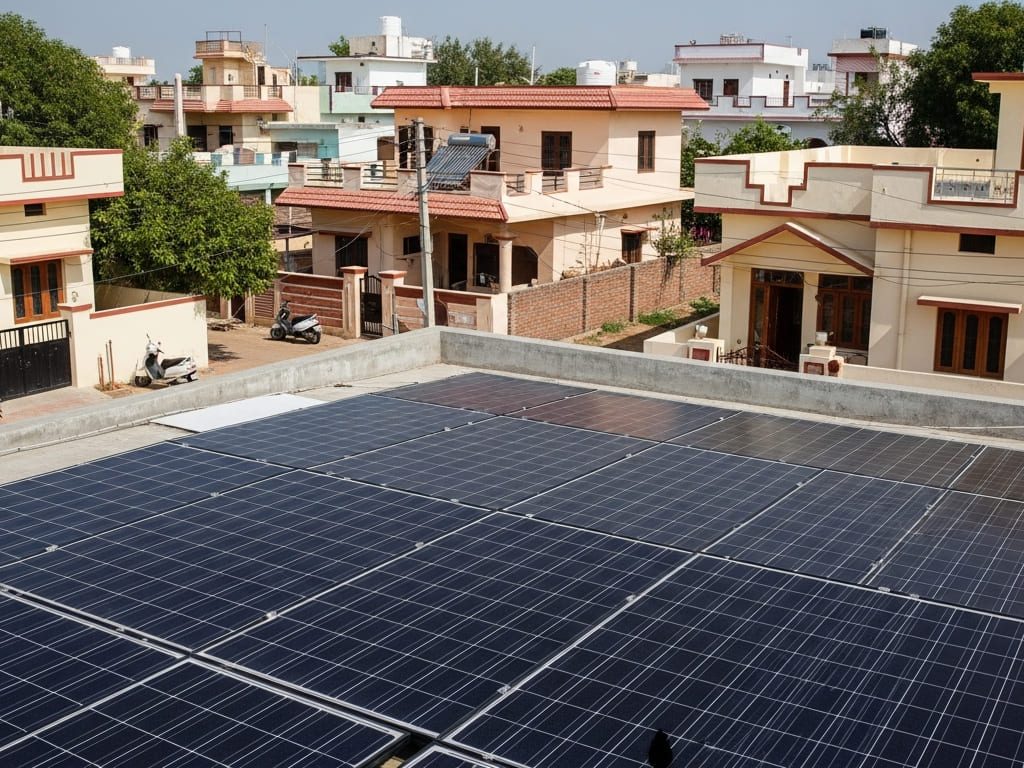
- Shading from nearby objects
- Wrong panel orientation
- Incorrect tilt angle
- Faulty MPPT or PWM settings
- Loose wiring or damaged connectors
- Aging inverter or panel degradation
- High temperatures (yes, heat reduces efficiency!)
But before you panic, 80% of low-performance cases are easy to fix.
1. Clean Your Solar Panels (The #1 Reason for Low Output)
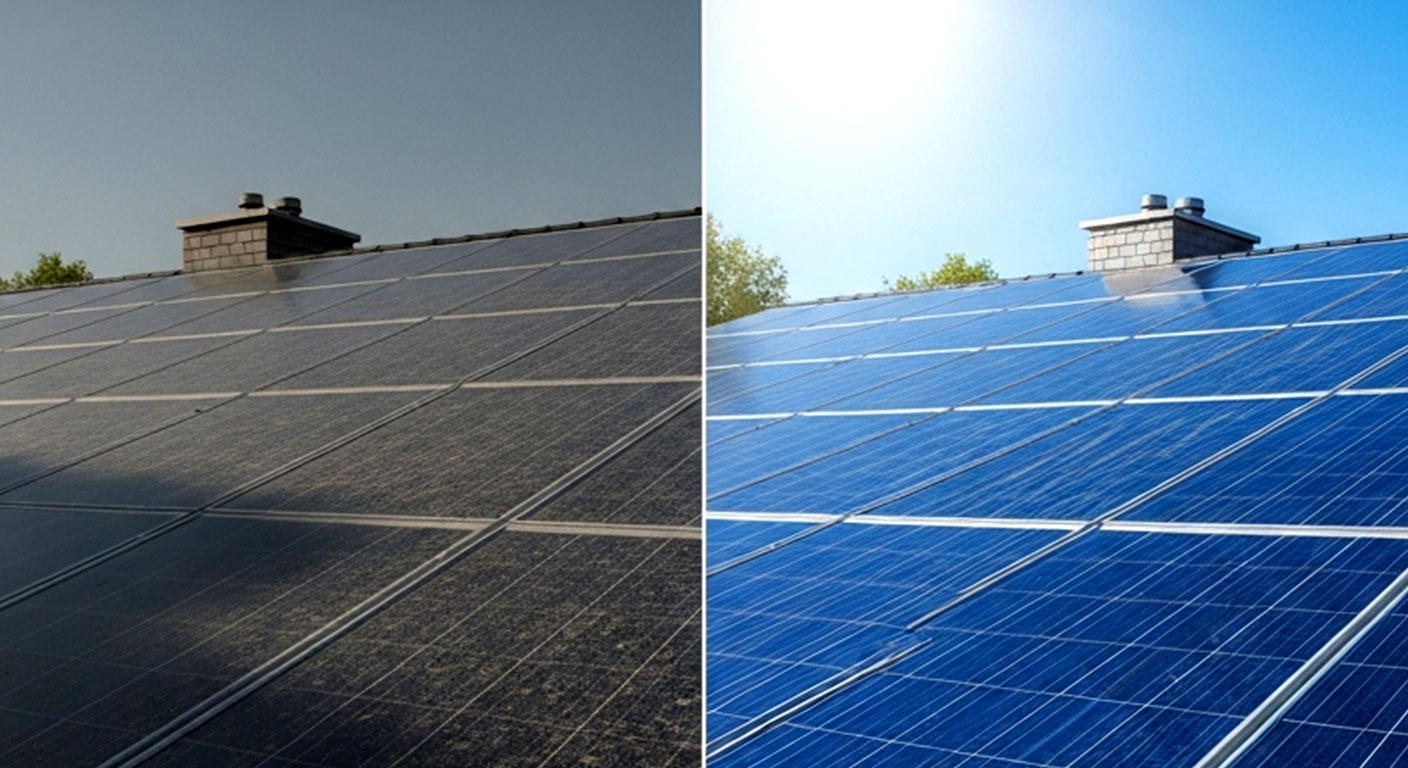
Dust, bird droppings, pollution, and layer buildup block sunlight from reaching the PV cells.
Even light dust can reduce generation by 10–15%.
Heavy buildup? Up to 40% loss.
✔ How to Fix It
- Clean panels every 15–30 days in dusty regions
- Use soft water + microfiber cloth
- Avoid harsh chemicals
- Never clean during peak sunlight
✔ Pro Tip
If you see a sudden drop in output, cleaning often restores performance immediately.
2. Check for Shading – Even Small Shadows Reduce Power
A small shadow from:
- Water tank
- Dish antenna
- Tree branch
- Parapet wall
- Neighbor’s building
…can drastically cut your generation.
In traditional panels, shade on even 5% of the panel can drop output by 30–40%.
✔ How to Fix It
- Trim surrounding trees
- Raise panel height using taller mounting structures
- Shift panels slightly to avoid shading
- Install half-cut or TOPCon panels that handle shade better
- Consider module-level optimizers for heavy shade zones
✔ Tip
Check your roof at 8 AM, 12 PM, and 4 PM to identify hidden shading patterns.
3. Correct the Orientation and Tilt Angle
Solar panels work best when directly facing the sun.
✔ Best Orientation in India
South-facing panels give maximum output.
Panels facing east or west often lose 15–20% efficiency.
✔ Recommended Tilt Angle
Tilt should roughly match the latitude of your location:
- Delhi: 28°
- Mumbai: 19°
- Jaipur: 26°
- Kolkata: 22°
Wrong tilt? Expect 5–12% lower generation.
✔ How to Fix
- Adjust tilt every 6 months for maximum seasonal performance
- Use adjustable mounting structures if possible
4. Check Your MPPT or PWM Settings
Many hybrid and off-grid systems use MPPT charge controllers.
Wrong MPPT settings can cause:
- Undercharging
- Low generation
- Battery drain
- System inefficiency
✔ What to Check
- Correct battery type selected (Lithium/SMF/Lead Acid)
- Correct voltage settings
- Check for error codes on the charge controller
- Update firmware (if supported)
✔ Why MPPT Matters
MPPT can increase generation by 20–30% compared to PWM.
If your system still uses PWM, upgrading to MPPT is a big performance boost.
5. Inspect Wiring, Connectors, and Junction Boxes
Loose wires or MC4 connectors create resistance, reducing output significantly.
Common issues:
- Burn marks
- Melted terminals
- Rust inside connectors
- Loose crimping
- Water inside junction box
✔ How to Fix
- Tighten all connections
- Replace damaged MC4 connectors
- Ensure cables are UV-resistant
- Use proper cable routing to avoid tension or bending
If you’re not confident, call a certified solar technician.
6. Check for Overheating (Panels Lose Efficiency in Heat)
Solar panels love sunlight—but hate heat.
For every 1°C rise above 25°C, panels can lose 0.3%–0.5% efficiency.
On a 45°C summer day, the output loss can be substantial.
✔ How to Fix
- Ensure proper air gap behind panels
- Avoid installing directly on rooftops without mounting
- Use high-efficiency N-Type TOPCon panels (they handle heat better)
7. The Inverter Might Be the Real Problem
Inverters are the “brain” of the solar system.
If panels are generating DC power but the inverter is malfunctioning, you’ll get low output.
Check for:
- Inverter error codes
- Low DC voltage
- Grid unbalance issues
- Firmware updates
- Aging components
✔ Quick Fix
Restart the inverter: Turn OFF → Wait 30 seconds → Turn ON
If the problem continues, call service support.
8. Degradation: Older Panels Produce Less Power
Solar panels degrade slowly over time.
Standard degradation rates:
- 1st year: 2–3%
- From 2nd year: ~0.5% per year
If your system is older than 7–8 years, a 10–12% drop in output is normal.
✔ Solution
Upgrade to:
- 545W TOPCon Bifacial Panels
- 590W Dual Glass TOPCon Bifacial Half-cut Solar Panels
- High-efficiency 16BB modules
You’ll get 30–40% more power from the same rooftop area.
9. Check for Manufacturing Defects (Rare but Possible)
Issues like:
- Hotspots
- Microcracks
- PID (Potential Induced Degradation)
- Delamination
…can reduce performance.
✔ How to Fix
- Run a thermal scan
- Request manufacturer warranty support
- Replace damaged modules
10. Monitor Your System Daily (Simple Tracking Boosts Output)
Most inverters provide:
- Daily generation
- Panel voltage
- Grid voltage
- Fault logs
Tracking performance allows early detection of:
- Drop in output
- String mismatches
- MPPT inefficiency
- Faulty panels
✔ Apps can help
Use your inverter’s app to monitor live data.
11. Use a Solar Performance Calculator
Online solar calculators help you compare:
- Expected output vs actual
- Month-by-month generation
- Seasonal variation
If the difference is over 20–30%, something is wrong.
12. Is it Cloudy Weather? That’s Normal
Low output during:
- Monsoon
- Dust storms
- Winter fog
…is normal.
Solar generation can drop 30–60% on cloudy days.
This is not a system fault.
13. Upgrade to Better Technology for Higher Efficiency
If your system is old or uses polycrystalline panels, upgrading to modern technology offers a massive performance boost.
Best upgrade choices:
| Technology | Benefit |
| TOPCon (N-Type) | Highest efficiency, low degradation |
| Half-Cut Mono PERC | Better shading performance |
| Bifacial Panels | Generates from both sides |
| 16BB / 18BB Panels | Lower resistance, better electron flow |
Upgrading increases output even in the same space.
Conclusion: Low Output? Fixable in Most Cases
If your solar panels are not giving good output, don’t panic.
Most issues are simple:
- Clean the panels
- Remove shading
- Adjust angle + orientation
- Fix wiring
- Check MPPT settings
- Inspect inverter
- Replace old/damaged modules
With regular maintenance, your solar system can perform at maximum efficiency for 25+ years.
Frequently Asked Questions
1. Why is my solar panel output suddenly low?
Most common reasons are dust buildup, shading, wiring issues, or inverter faults.
2. How often should I clean my solar panels?
Every 2–4 weeks in dusty areas; every 6–8 weeks in clean climates.
3. Do solar panels generate power in clouds?
Yes, but output may reduce by 30–60%.
4. Does temperature affect solar efficiency?
Yes. Higher temperatures reduce panel efficiency.
5. Can shading on one panel reduce output of the entire system?
Yes. Partial shading can reduce output by 20–40%.