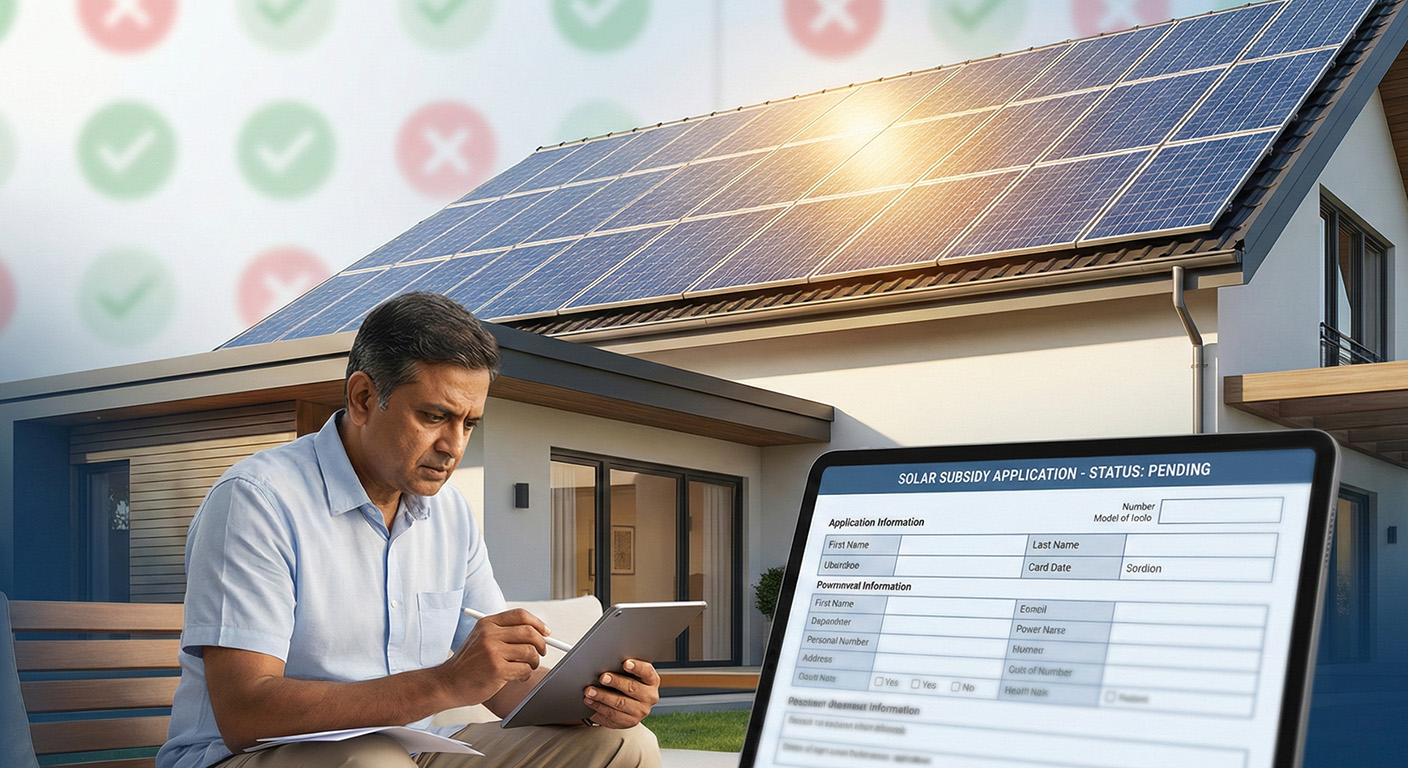
Common Reasons Why Your Solar Subsidy Gets Rejected and How to Avoid It
Installing a rooftop solar system is one of the smartest financial decisions a homeowner in India can make today. With electricity prices rising every year and solar technology becoming more affordable, millions of families are considering solar energy as a long-term solution for savings and energy independence.
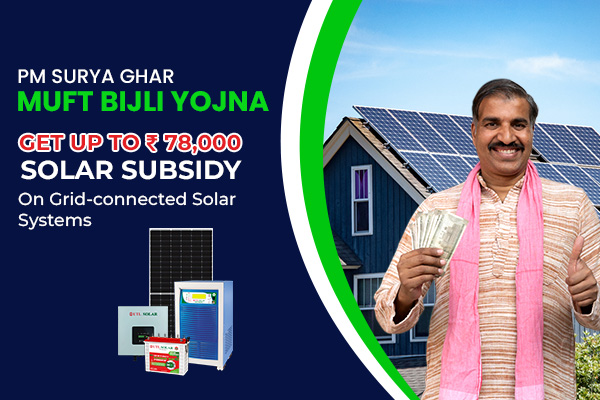
The Government of India has further encouraged adoption through the PM Surya Ghar Muft Bijli Yojana, offering subsidies up to ₹78,000 for residential rooftop solar systems. State-level subsidies also exist in regions like Delhi, Assam, Haryana, Rajasthan, and Gujarat, further reducing the installation cost.
However, thousands of applicants every year experience a frustrating setback:
Their solar subsidy application gets rejected.
Sometimes the rejection comes almost immediately.
Sometimes after installation is complete.
Sometimes at the DISCOM validation stage.
And in some cases, after months of waiting without any clear explanation.
The good news?
Most subsidy rejections are avoidable — if you understand the rules clearly and follow the process step-by-step.
This detailed guide explains:
- The most common reasons why subsidy applications get rejected
- How to avoid these mistakes
- What DISCOMs actually check
- How to ensure your subsidy is successfully approved
- A practical checklist you can follow before and after installation
Let’s begin.
1. Installing the System Before Applying on the National Portal
This is the #1 reason for subsidy rejection across India.
Many people install the solar system first and apply on the portal later, thinking it won’t matter.
But under the new subsidy rules:
✔ You MUST apply first on the National Portal
Before installation begins, the portal issues:
- Approval from DISCOM
- Vendor selection confirmation
- Project registration
If you install the system before portal approval, your application is considered invalid, and no subsidy will be processed.
How to Avoid This
- Register on the National Portal for Rooftop Solar first
- Wait for DISCOM approval
- Only then allow the vendor to begin installation
- Keep digital and printed proof of approval
This step is non-negotiable.
2. Installing Through an Unregistered / Unapproved Vendor
The government requires that every rooftop installation under the subsidy scheme must be done by:
✔ A vendor registered on the National Portal, and
✔ Approved by the relevant DISCOM
If your installer is not on the government’s registered vendor list, your application is instantly rejected.
Why DISCOM Rejects
- Unregistered vendors often do not follow technical standards
- They may skip documentation steps needed by DISCOM
- Poor-quality installations lead to safety issues
How to Avoid This
- Choose a MNRE-approved / DISCOM-approved vendor
- Check if the vendor is listed on the official National Portal vendor directory
- Avoid “local installers” offering cheap prices but not officially registered
3. Incorrect System Size (Mismatch Between Sanctioned Load and Solar Capacity)
Your solar capacity must match the rules defined by DISCOM and MNRE.
Most states follow this guideline:
- If your sanctioned load is 1–3 kW, you can install solar up to the same capacity
- For 4–10 kW, approval depends on feeder capacity and net-metering policy
- Oversized systems without permission may be rejected
Example:
If you have a 1 kW sanctioned load but install 5 kW solar, your subsidy will be denied because the system size exceeds approved limits.
How to Avoid This
- Check your sanctioned load on your electricity bill
- Discuss system sizing clearly with your vendor
- Apply for load enhancement BEFORE applying for solar if required
- Ensure the system capacity in the portal matches the actual installation
4. Using Non-Compliant or Uncertified Components
DISCOMs carefully check whether:
- Your solar panels are MNRE-approved (ALMM listed, if applicable)
- Your inverter meets Indian safety standards
- The mounting structure follows guidelines
- Cables, MCBs, and connectors meet IS standards
If any component does not meet Indian solar compliance requirements, your subsidy will be rejected.
How to Avoid This
- Buy panels from MNRE-approved manufacturers
- Ask the vendor for ALMM listing numbers
- Use C10-approved inverters
- Use branded MC4 connectors, DC cables, and protection devices
5. Wrong Installation Practices Detected During DISCOM Inspection
After installation, a verification officer from DISCOM inspects the system to ensure:
- Racking structure is secure
- Wiring is safe and follows the SLD
- Earthing is proper
- The system matches the portal application
- No components are missing
If the inspection officer finds any deviation, unsafe wiring, improper grounding, or mismatch, they mark the application as FAILED.
How to Avoid This
- Hire a professional MNRE-approved installer
- Ask for:
- Single Line Diagram (SLD)
- Earthing drawing
- Rooftop layout
- Single Line Diagram (SLD)
- Ensure all wiring is neat, labeled, and secured
- Ensure proper AC / DC protection and SPD installation
- Be present during DISCOM inspection to clarify details
6. Wrong or Mismatched Documents
Document mismatches are one of the most frustrating reasons for rejection.
Documents DISCOM typically verifies:
- Electricity bill name
- Aadhaar card name
- PAN card (if required)
- Property ownership documents
- Bank details for subsidy transfer
- Photograph of the system
- Net meter installation documents
- Installation certificate (signed by vendor + customer)
If ANY of these documents do not match, the subsidy gets blocked.
Common mismatches
- Customer name is different on electricity bill and Aadhaar
- Joint property ownership without consent letter
- Bank account name mismatch
- Incorrect system photos (e.g., incomplete system shown)
How to Avoid This
- Ensure the same name appears on the electricity bill and Aadhaar
- If different, add a consent affidavit
- Upload clear, high-resolution photos
- Double-check vendor-supplied documents
7. Missing or Incorrect Net Metering Application
Net metering is mandatory for subsidy approval.
If any of the following happen, subsidy is rejected:
- Net meter not applied
- Incorrect documents uploaded
- Delay in net meter approval
- Net meter not installed within the required timeframe
- Incompatible or low-quality net meter installed
How to Avoid This
- Apply for net metering the same day you apply on the portal
- Track net metering status weekly
- Ensure the meter supports solar import/export
- Keep a copy of the testing & commissioning report
8. Uploading Wrong Photos on the National Portal
This is a surprisingly common rejection reason.
The portal requires specific photos such as:
- Rooftop image with panels
- Inverter installation
- DC distribution box
- AC distribution box
- Earthing
- Net meter
- Selfie with installation (often mandatory)
If any photo is unclear, missing, or incorrect, the application gets rejected.
How to Avoid This
- Capture photos in daylight
- Ensure the entire system is visible
- Avoid blurry or low-resolution images
- Upload photos exactly as per portal guidelines
9. System Not Connected to the Grid Properly
Even if the system works, DISCOM requires:
- Proper AC synchronization
- Correct wiring of the export meter
- Strict compliance with the state’s net metering standards
If the system is improperly connected or unsafe, subsidy cannot be processed.
How to Avoid This
- Use licensed electricians
- Follow approved SLD
- Ensure proper AC/DC earthing
- Keep inverter logs ready during inspection
10. Vendor Not Uploading the Required Reports
Sometimes the customer does everything correctly, but:
- Vendor does not upload commissioning report
- Vendor delays uploading the installation certificate
- Vendor fails to respond to DISCOM queries
- Vendor uploads incorrect data
This causes unnecessary delays or rejections.
How to Avoid This
- Choose experienced vendors with a proven subsidy track record
- Ask the vendor to give you a timeline for document uploads
- Follow up regularly
11. Applying for a Capacity that is Not Eligible for Subsidy
Some system types do not qualify for subsidy:
❌ Off-grid system
❌ Systems with lead-acid batteries
❌ Systems without net metering
❌ System using unapproved brands
❌ Pumping systems
❌ DIY installations
❌ Commercial installations (subsidy is for residential only)
If you apply under any of these categories, your request will be rejected.
How to Avoid This
- Make sure your system is:
- Grid-connected
- On-grid or hybrid
- Uses compliant components
- Grid-connected
- Check eligibility on the National Portal before applying
12. Applying Multiple Times From the Same Consumer Number (CA Number)
If you apply multiple times:
- From the same CA number
- From the same Aadhaar
- For the same property
DISCOM may block your application.
How to Avoid This
- Submit only ONE application per CA number
- In case of errors, ask DISCOM to cancel the previous application
- Avoid duplicate vendor submissions
How to Ensure Your Solar Subsidy Is Successfully Approved
Follow this simple step-by-step checklist.
✔ Solar Subsidy Approval Checklist (Practical Guide)
Before Installation
- Apply on the National Portal
- Get DISCOM approval
- Select an approved vendor
- Confirm sanctioned load
- Finalize SLD
- Get load enhancement if required
During Installation
- Ensure MNRE-approved panels
- Use certified inverter
- Proper earthing (2–3 earth pits depending on state)
- Proper AC/DC protection
- Capture all required photos
- Maintain neat wiring
After Installation
- Apply for net metering immediately
- Track net metering approval
- Ensure vendor uploads:
- Installation certificate
- Commissioning report
- Photographs
- Panel and inverter details
- Installation certificate
During DISCOM Inspection
- Be present onsite
- Show system documents and invoices
- Ensure safe wiring and compliance
- Ask for the inspection report copy
Final Steps
- Check portal status
- Ensure bank details are correct
- Wait for subsidy disbursement
Conclusion
The solar subsidy process may seem complicated, but most rejections happen due to simple and avoidable mistakes — incorrect applications, mismatches, improper installation practices, or unapproved vendors.
By understanding the rules clearly and following the guidelines step-by-step, you can ensure your subsidy application is processed smoothly and approved without delays.
Solar energy is not just an investment in savings — it’s an investment in a cleaner, more sustainable future.
Take the time to do it right, and the benefits will reward you for decades.