
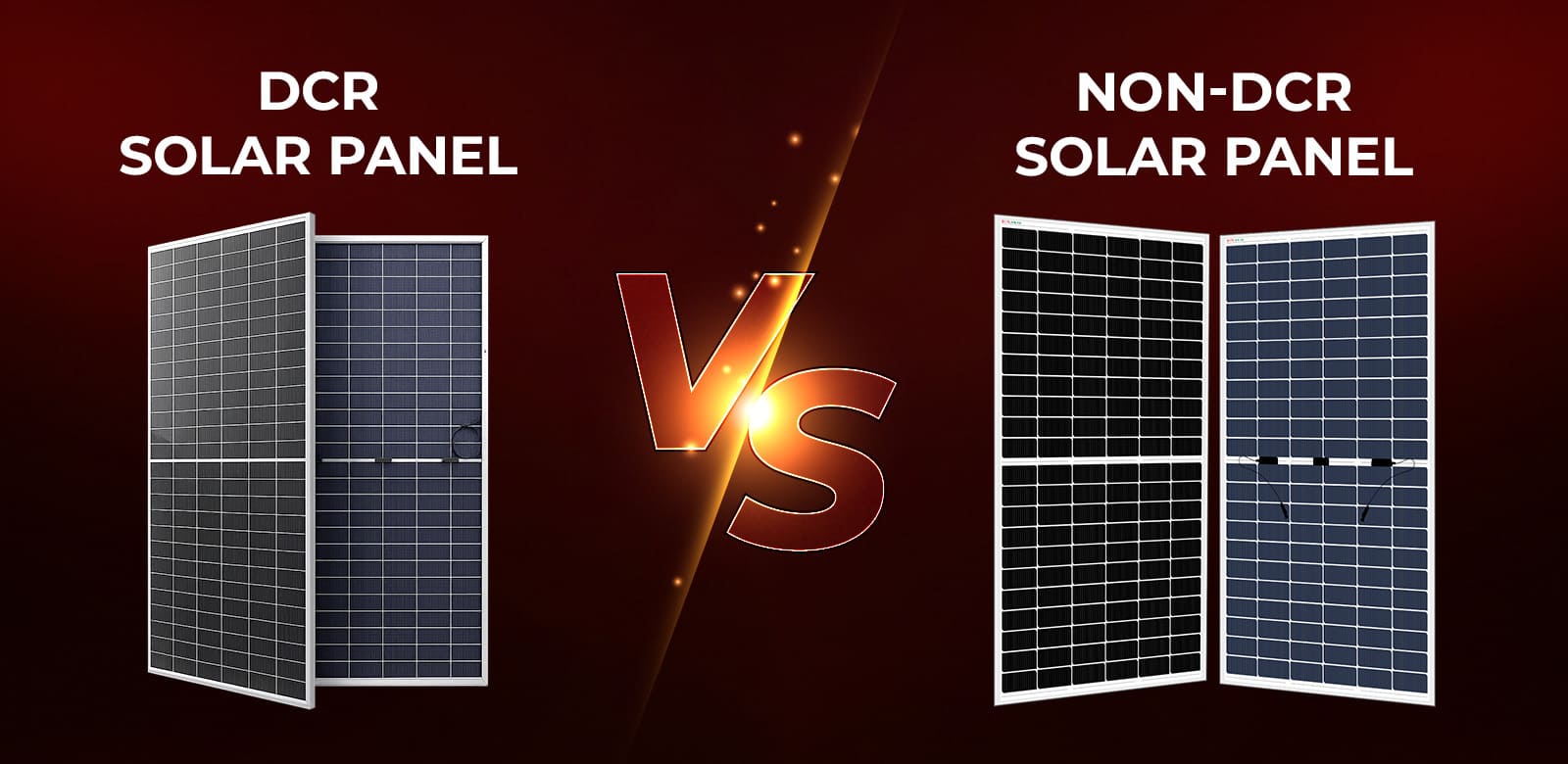
DCR vs Non-DCR Modules: What the Policy Really Means for Buyers
Government solar subsidies may look simple but securing financial support depends on following a process. Some of the subsidy applications are frequently rejected or never completed. In most cases, this is due to a lack of awareness about how DCR and Non-DCR panels differ from each other, and how each option can be beneficial depending on the project type and subsidy requirements.
Most buyers discover this only after installation, when they realize the panels they selected do not meet subsidy conditions. In other cases, they find that an alternative panel category could have delivered better commercial value for their specific project.
This gap comes from focusing on solar panel price, efficiency, or brand, while missing a crucial policy requirement linked to the subsidy process. The difference between these two types of solar modules is not just technical—it directly determines whether a system qualifies for government incentives or delivers your specific requirements.
To avoid this costly confusion, it is important to clearly understand what DCR and Non-DCR modules are, how they differ, and what the policy actually means for buyers. The below sections break down both categories step by step to help you make an informed decision.
What are DCR Solar Modules?
Under DCR (Domestic Content Requirement) norms, solar modules must be manufactured in India using locally produced solar cells along with other essential components such as wafers, glass, frames, backsheets, and encapsulant materials. The DCR framework supports government policy objectives, including the Make in India initiative, reducing dependence on imported components, and developing a robust domestic solar manufacturing ecosystem. With local production, these policies also strengthen supply reliability, encourage investment in domestic manufacturing, and create employment opportunities across the solar value chain.
DCR requirements are primarily applied to residential rooftop solar projects that seek government subsidies. Since these schemes provide financial incentives directly to households, compliance with DCR guidelines is mandatory to ensure that subsidies benefit both local manufacturers and homeowners.
Qualifies for government Subsidies Under:
- CPSU Phase II
- PM-KUSUM (Components A, B & C)
- PM Surya Ghar Yojana
- Grid-Connected Rooftop Programs
NOTE: The DCR classification is linked to subsidy compliance and is independent of panel efficiency or output performance.
What are Non-DCR Solar Modules?
Non-DCR solar modules are those that are either fully imported or manufactured using imported solar cells. Since these panels are not restricted by domestic manufacturing requirements, they benefit from large-scale global production and broader supply chains.
Non-DCR panels are best suited for buyers who prioritise commercial flexibility, global technology options, or projects where government incentives are not part of the financial model. Although Non-DCR modules are not eligible for government subsidies, its competitive pricing contributes to long-term cost savings.
These solar PV (Photovoltaic) modules are widely preferred for large-scale and utility projects because such installations require high volumes of panels with cost targets. Since these modules can be sourced from global suppliers, project developers gain access to competitive pricing across large quantities.
Which One to Choose – DCR vs Non-DCR Modules
Choosing between DCR and Non-DCR solar PV modules depends on the type of project, subsidy requirements, and budget. While both types produce electricity effectively, each has strengths that make it suitable for specific situations.
1. Residential Rooftop Projects with Subsidy
- Best choice: DCR modules – Only DCR-compliant panels qualify for most government subsidies. Policy compliance is more important than marginal differences in panel performance.
2. Large-Scale, Commercial, or Utility Projects (≥10 kW)
- Best choice: Non-DCR modules – They offer wider technology options and standardised specifications which make multi-project planning easier for large-scale installations.
3. Budget and Long-Term Cost Considerations
- Non-DCR modules often have more competitive upfront pricing, particularly for large-scale installations, which can lead to better cost control over the project lifecycle.
- DCR modules may cost slightly more due to domestic manufacturing. But in residential subsidy-linked projects, the net investment can be lower once the subsidy is factored in.
The choice between DCR and Non-DCR modules should never be made based only on price or efficiency. It should be aligned with your project goal.
How to Verify Whether a Solar Panel Is DCR-Compliant
For residential rooftop solar projects linked to government subsidies, simply choosing a “DCR panel” is not enough. Buyers must ensure that the installed solar modules are officially registered and verifiable under the DCR Verification Portal managed by government-authorised agencies.
The DCR Verification Portal allows buyers, installers, and inspection authorities to verify the authenticity of DCR-compliant solar modules using either:
- DCR Certificate Number, or
- Unique Panel Serial Number

This verification step is critical because subsidy approvals are often rejected when panel details cannot be validated against the official DCR database—even if the panels were marketed as DCR-compliant.
Conclusion
Both types of solar PV panels are capable of delivering reliable energy over the system’s lifetime, but the optimal choice hinges on policy compliance and project size. Understanding the distinctions between DCR and Non-DCR allows homeowners and businesses to make informed decisions that balance budget, scalability, and long-term value. By considering your project’s specific requirements—whether its subsidy eligibility, or installation scale—you can select the solar solution that maximizes financial benefits while supporting sustainable energy growth.




मुझे 10kv का सोलर पैनल पैट्रोल पम्प पर लगाना हे